
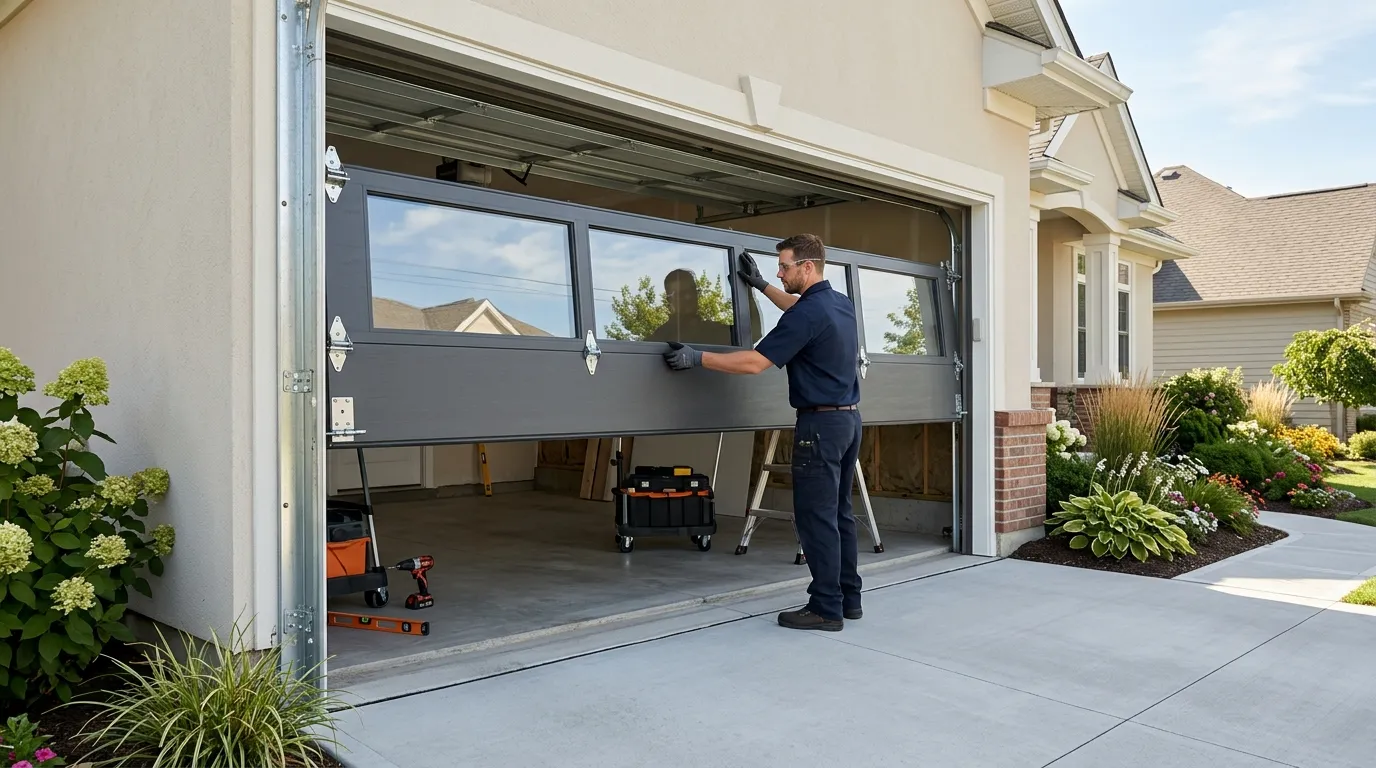
Opener Repair in Inverness
Opener Repair for Inverness's 1980s Double-Wide Doors
Openers on Inverness's 1984-era double-wide doors carry more weight than most builder-grade units. We diagnose and fix them, traveling 3 miles from our Palatine shop.
- Licensed & Insured
- Same-Area Service Calls
- Upfront Pricing
What Happens When You Call
-
1
Call or Request a Quote
Tell us what the door is doing and roughly how old the house is - that alone points us toward the likely part before a truck leaves.
-
2
On-Site Diagnosis
A tech checks the spring, cables, tracks, and opener in person and tells you plainly what is actually wrong.
-
3
Straight Price, No Surprises
You get a number before any work starts. It covers parts and labor, nothing added after the fact.
-
4
Fixed the Same Visit
Most repairs are done in one trip. If a part needs sourcing, we tell you that upfront instead of guessing.
Doing It Yourself
Most houses in Inverness went up around 1984, and the lots here run bigger than what you'll find closer into Palatine, which means the doors are bigger too - a lot of two-car openings are a single 16-foot door rather than two 9-footers. That's more door for the opener to lift, and it's worth knowing before you start troubleshooting.
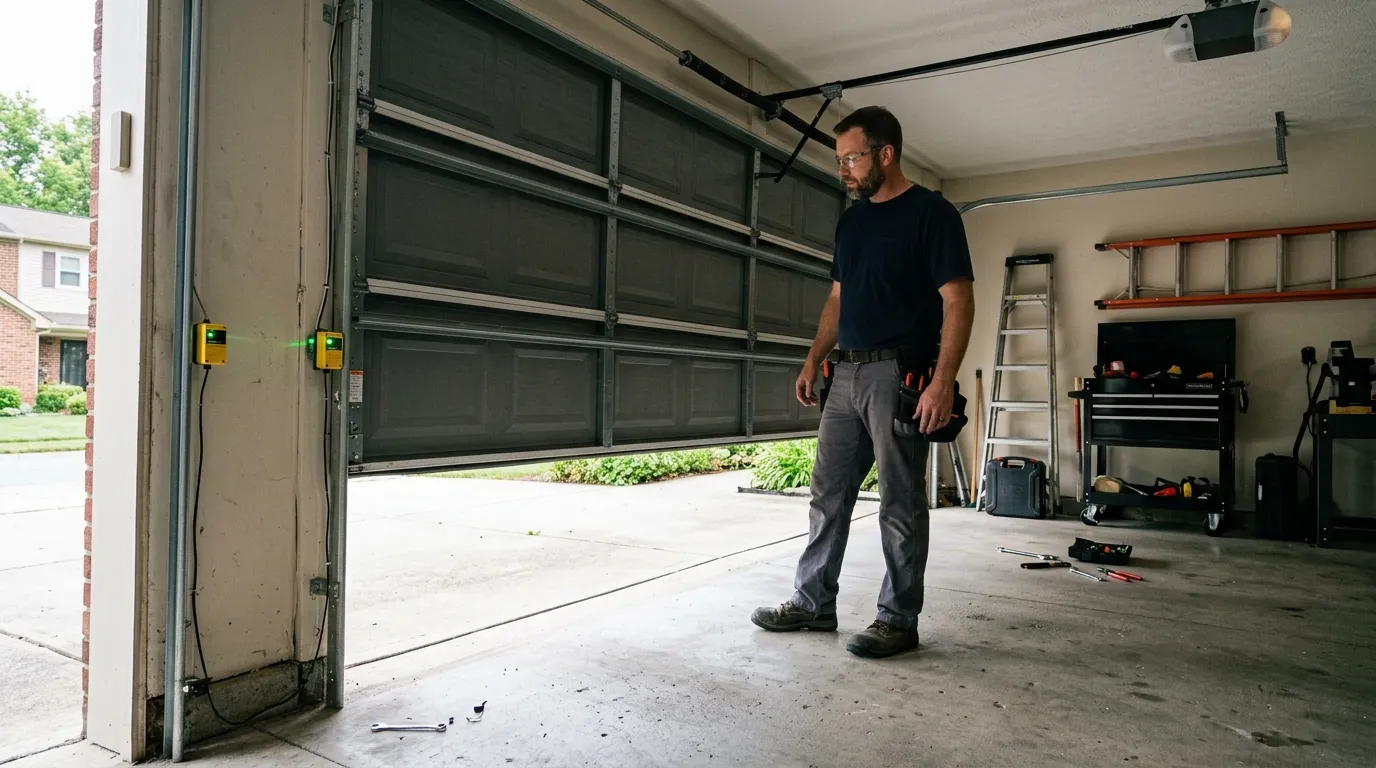
Check the easy stuff first. Wipe the safety sensor lenses near the floor on each side of the track - cobwebs or a nudged bracket are the most common reason a door reverses or won't close at all. Swap the remote battery.
Look at the wall button wire where it runs along the ceiling for a chewed or pinched spot, especially in an unfinished garage. If the opener runs but the door doesn't move, or you hear the motor straining, stop there. On a door this size, a stripped gear or a failing capacitor isn't a five-minute fix, and forcing it usually turns a $200 repair into a $500 one.
We don't recommend homeowners open the opener housing or touch the drive gear themselves - the parts are small, the belt or chain tension matters, and getting it wrong can strand the door half open.
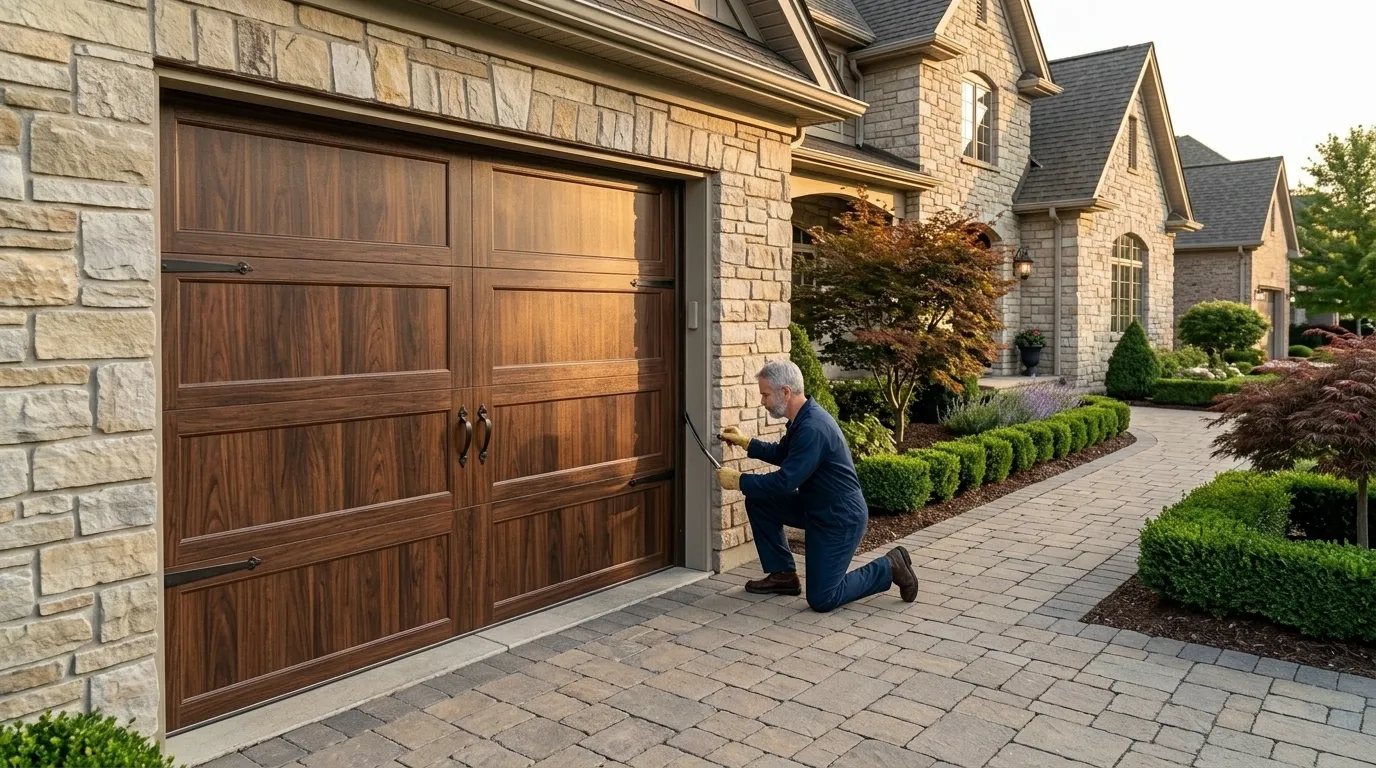
What the Fix Involves
On an opener old enough to match Inverness's 1984 median build year, we're usually looking at one of a handful of failures: a worn drive gear (the plastic part that actually pulls the chain or belt), a dying capacitor on a chain-drive motor, a logic board that's taken a power surge, or safety sensors that have drifted out of alignment after years of the garage settling. Severe cold makes some of these worse - grease in an old gearbox thickens below freezing and makes the motor work harder to start the door moving, which accelerates wear on units already past their expected life.
We test the motor under load first, because a door this size can mask a weak motor as a track or spring problem. If the opener itself is sound, we replace the specific failed part - gear kit, capacitor, sensor eye, or logic board - rather than the whole unit. If the motor is undersized for the door's actual weight, which happens more often than you'd think on custom doors installed after the original builder-grade opener failed, we'll say so and talk through a heavier-duty replacement instead of patching a mismatch.
Where This Job Goes Sideways
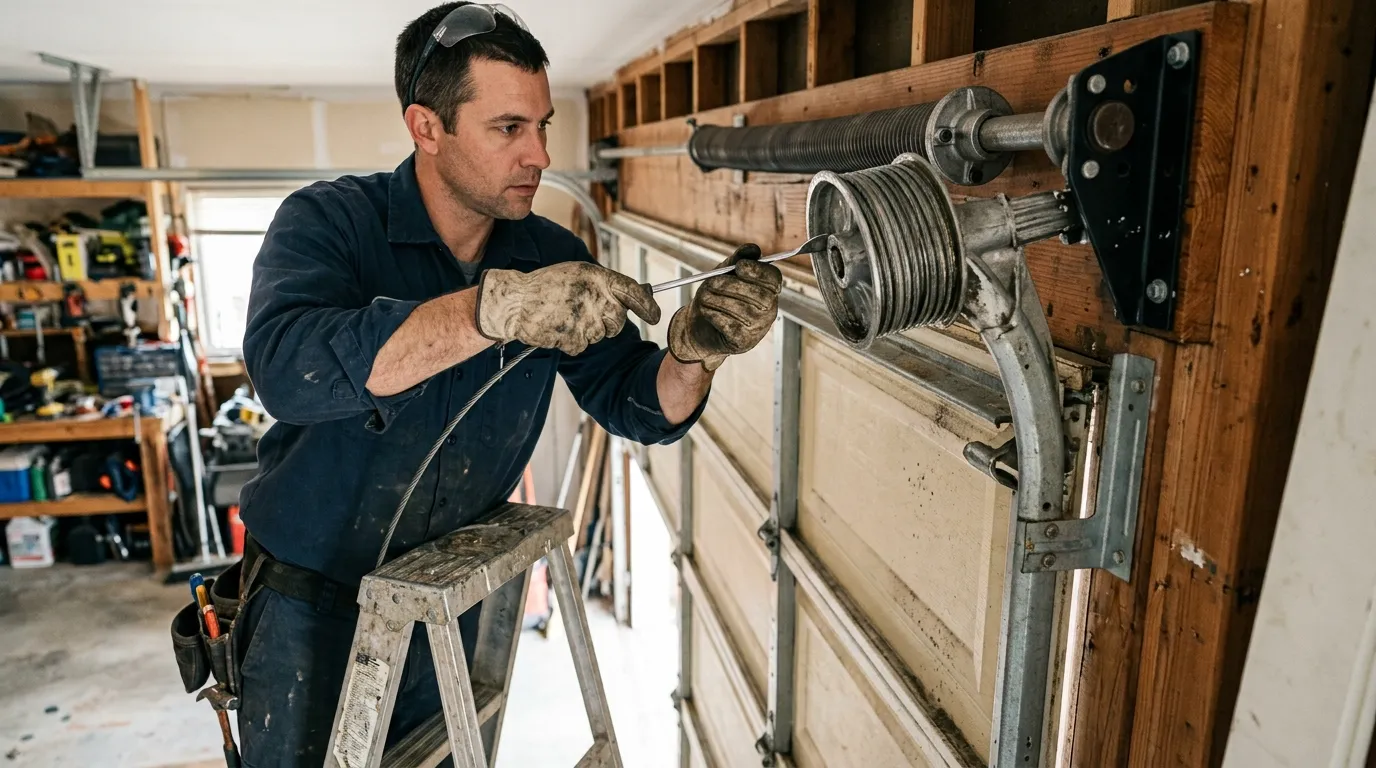
The most common misdiagnosis we see out this way is a homeowner replacing an opener when the actual problem is the door itself - a spring losing tension makes the opener strain and can look identical to a motor going bad, especially on the heavier double-wide doors common on Inverness lots. Swapping the opener doesn't fix a spring problem, and now you've spent money twice.
The other place it goes wrong is opener sizing. If a door was upgraded or replaced at some point after the house was built in the 1980s and got heavier - solid wood-look composite instead of the original lighter steel - but the opener stayed the same 1/3 HP unit from the original build, that opener is working past its rating every single cycle.
It'll fail again within a year even after a good repair, because the fix wasn't the actual problem. We check the door's actual weight and the opener's rating together before we call a repair finished, not just whether it's moving.
Booking a Visit
We run this job from our Palatine shop, about 3 miles from most Inverness addresses, so there's no separate depot or crew based in town - just a short drive out. Tell us the opener brand if you know it, roughly how old it is, and what it's doing (won't close, reverses, grinding noise, dead) and we can usually tell you over the phone whether it sounds like a part swap or something bigger. See our Inverness garage door page for the other work we handle in the area, or the Palatine opener repair page for what the job looks like closer to the shop.
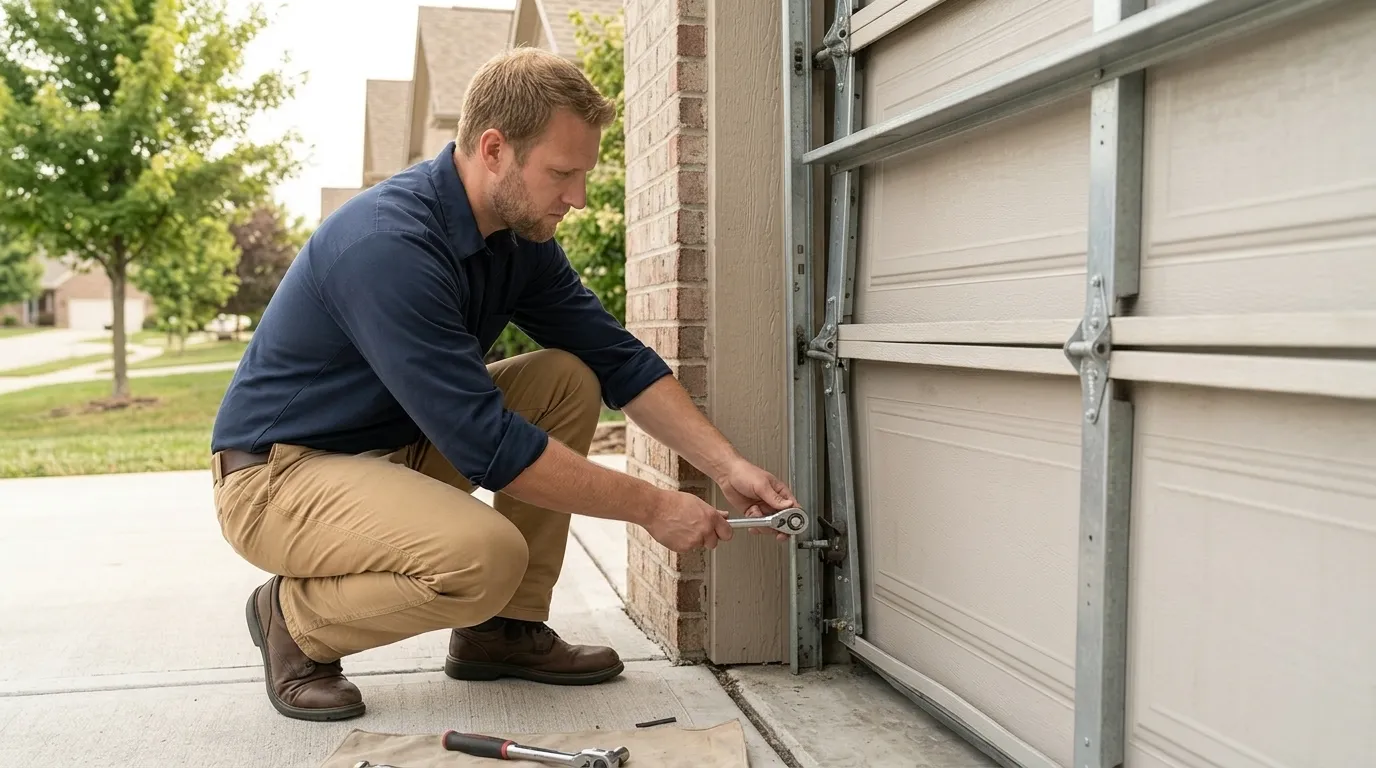
The Cost of This Job
We're not going to put a number on this one without seeing the door and the opener, because the range is wide - a sensor realignment is a different job entirely from a logic board swap or a full motor replacement on an oversized door. What we can tell you: households in this part of the service area report a median income well above the area-wide figure, and we've seen that reflected in more custom, heavier doors that ask more of an opener than the original builder-grade unit was ever rated for.
That matters for cost because the fix sometimes isn't just the opener - it's matching the opener to the door it's actually lifting now. We'll quote the job after we've looked at both, not before.
Talk to a Inverness Technician First
Describe what the door is doing and get a straight answer on what it likely needs.
Other Garage Door Services in Inverness
Recent Work in Inverness
A look at jobs our crew has been on nearby.
Why Inverness Calls Us
Frequently Asked Questions
How old is the housing stock in Inverness, and does it affect opener repairs?
Homes here have a median build year around 1984, and many still run original or first-replacement openers. Those units are past the age where parts like drive gears and capacitors commonly fail, especially with severe cold winters adding strain on the motor.
Do you have a crew based in Inverness?
No. We work out of Palatine, about 3 miles away, and drive out for calls in Inverness. There's no separate branch or depot in town - just a short trip from our shop.
Why did my opener suddenly get louder or start straining?
On the larger double-wide doors common on Inverness lots, a straining motor often means the door itself is heavier than the opener was ever rated for, or a spring is losing tension. We check both before replacing anything.
Can I just replace the opener myself?
Battery swaps, sensor cleaning, and checking the wall button wire are fine to do yourself. Opening the motor housing or working near the drive gear or chain tension isn't something we recommend without training - it's easy to strand a heavy door half open.
Need Opener Repair in Inverness?
Call now for straight answers on cost and timing.