
Service
Garage Door Installation in Palatine
Garage door installation for Palatine homes built between 1938 and 2009, matched to the openings and cold-climate demands common on this side of the county.
- Licensed & Insured
- Same-Area Service Calls
- Upfront Pricing
What Happens When You Call
-
1
Call or Request a Quote
Tell us what the door is doing and roughly how old the house is - that alone points us toward the likely part before a truck leaves.
-
2
On-Site Diagnosis
A tech checks the spring, cables, tracks, and opener in person and tells you plainly what is actually wrong.
-
3
Straight Price, No Surprises
You get a number before any work starts. It covers parts and labor, nothing added after the fact.
-
4
Fixed the Same Visit
Most repairs are done in one trip. If a part needs sourcing, we tell you that upfront instead of guessing.
The Cost of This Job
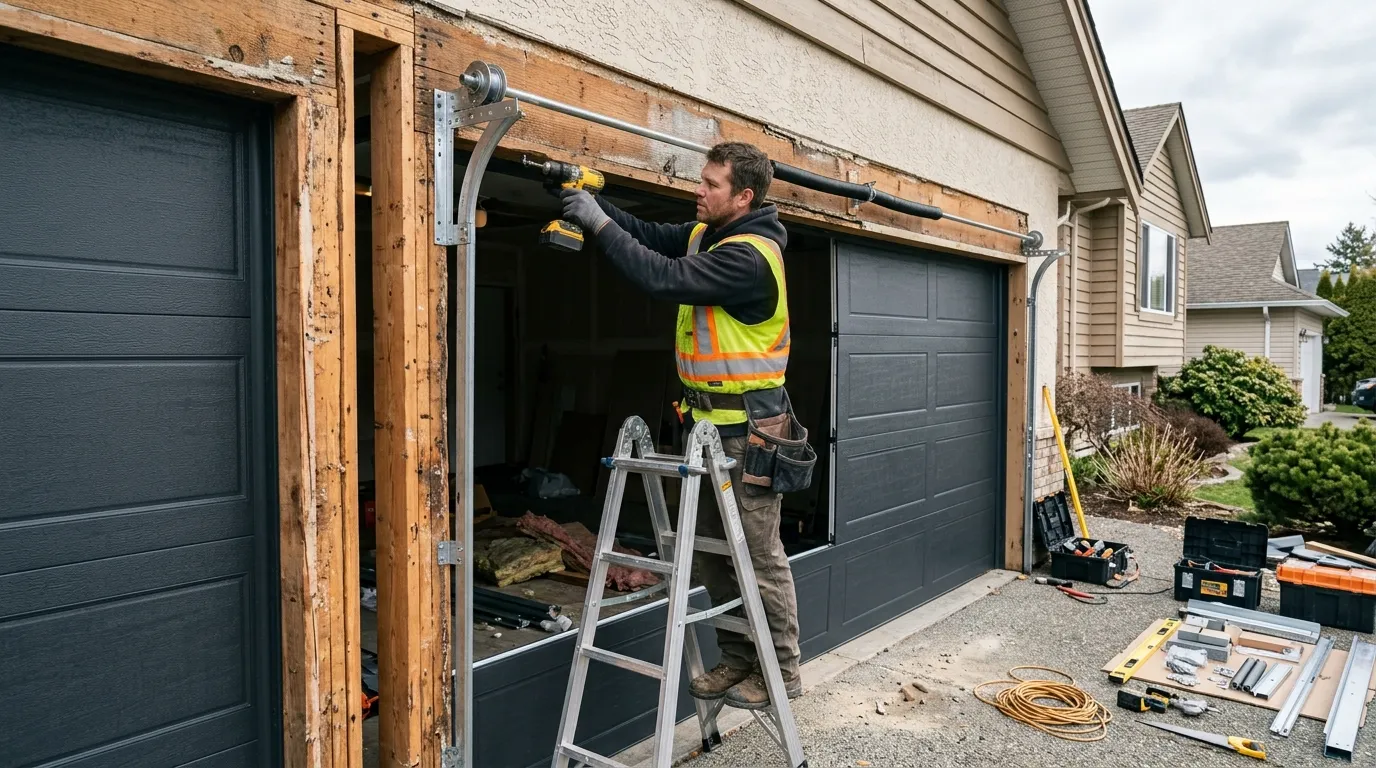
We can't quote a number here without seeing the opening, so we won't pretend otherwise. What drives the price on an installation is the door size, the insulation level you pick, and whether the existing track and jamb can be reused or need rebuilding. In Palatine, that last part matters more than in newer subdivisions: housing here spans 1938 through 2009, with most of it going up in the 1980s and 90s, and older framing often doesn't match a modern pre-hung door section without some carpentry.
A severe cold climate also pushes the conversation toward insulated steel over a bare single-layer door, since an uninsulated door in this band of the country works against your furnace all winter. That's a real cost difference, not an upsell line - R-value costs money, and skipping it costs you on the gas bill instead.
We'll walk the opening with you, tell you what the frame will and won't take, and give you a written number before anything gets ordered. If a repair gets you another five years for a fraction of a new install, we'll say so - replacement isn't always the right call just because it's the bigger job.
Why This Fails Locally
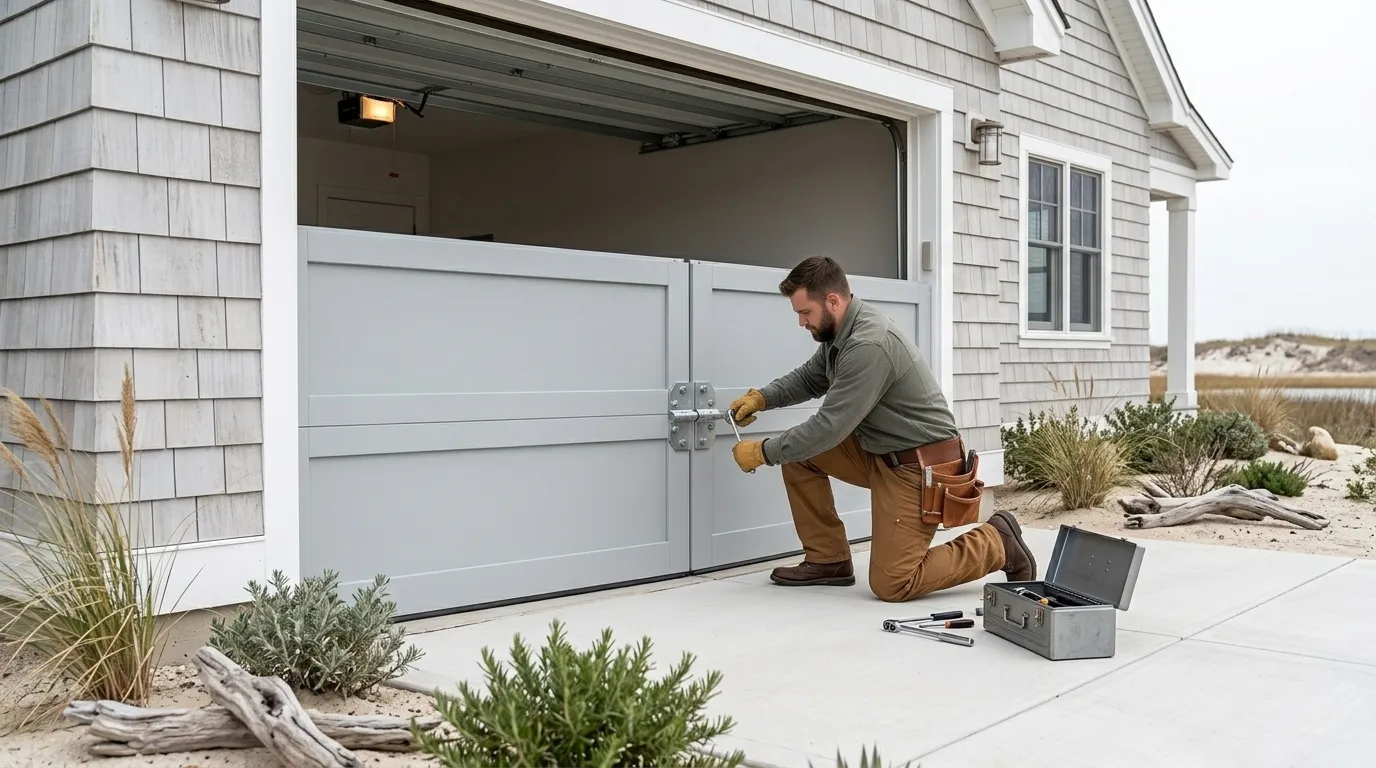
A door that's original to a house built in the 1960s through the 1980s - which describes a lot of Palatine stock, median build year 1980 - was sized and hung for a different set of expectations than what's sold today. Tracks were often set for lighter, single-layer doors, and hardware wasn't engineered around swings between a mild fall and a severe cold winter the way current sections are.
That combination is why installation calls here skew toward full swap-outs rather than simple panel swaps: the old track geometry doesn't take a modern insulated door without adjustment, and cold-band steel expands and contracts differently than the door it's replacing. We see it most in the older pockets rather than the newer streets, since houses built closer to 2009 already have hardware sized for insulated sections.
The other local factor is moisture and freeze cycling on the slab under the door. Severe cold means more freeze-thaw at the threshold, and a door hung without accounting for that will bind or drag by the second winter. It's not a defect in the door - it's a mismatch between an older opening and a door that wasn't built for this climate band in the first place.
The Symptom
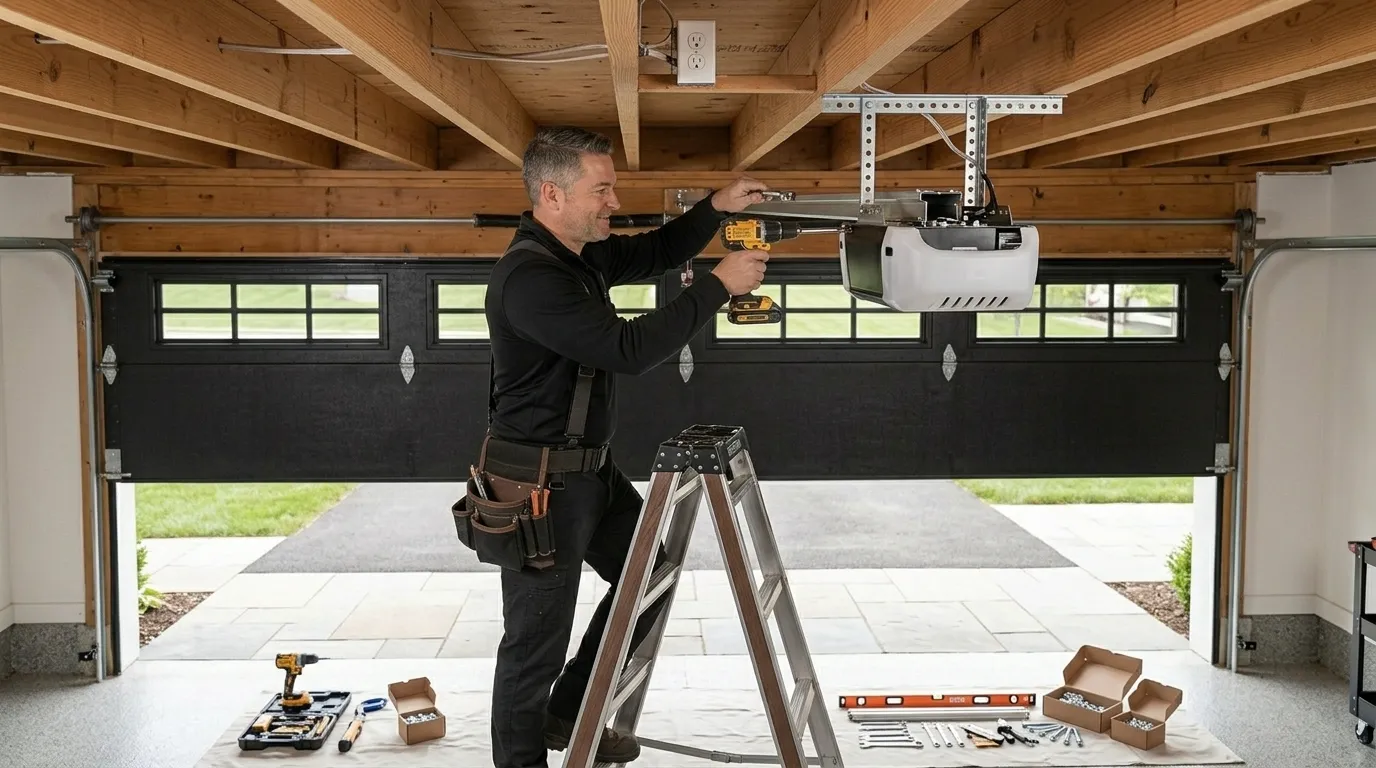
The call we get most from this kind of mismatch isn't a door that won't open at all - it's one that binds partway, or closes crooked, or takes noticeably more effort in January than it did in August. That's the track and the door disagreeing after years of a cold-climate freeze cycle working on hardware that wasn't specified for it.
Sometimes it shows up as a gap along one edge that wasn't there when the door was newer, or as a door that looks fine but doesn't seal, letting cold air into the garage and, if there's a room above it, into the house. On older Palatine openings we've heard this described as "it just got stiff" - which is really the frame settling and the door no longer tracking true.
If your door is dragging on one side or groaning through the last foot of travel, that's usually the track, not the opener, and it's worth having someone look at the opening itself before spending money on a new drive unit that won't fix it.
Booking a Visit
If you want a firm number, we need to see the opening - photos over the phone only get us so far when the frame is decades old and may not match current door sizing. We'll look at the track, the jamb, and the header, tell you honestly whether you're looking at a repair or a full install, and put a number in writing before you commit to anything.
We cover Palatine and the surrounding area, including towns like Inverness, Deer Park, and Wheeling within a few miles. If your street sits closer to one of those than to downtown Palatine, we still take the call - the housing stock and climate factors are the same across this stretch.
Talk to a Technician Before You Book
Describe what the door is doing and get a straight answer on what it likely needs.
Other Ways We Can Help
Jobs Like Yours
Recent work from this service line.
Why Palatine Calls Us
Frequently Asked Questions
Why does my garage door get stiff every winter?
In a severe cold climate like this one, metal track and hardware contract, and if the door or track wasn't specified for that swing - common in houses built well before current insulated doors were standard - it binds. It's usually the track geometry, not the opener, and it tends to show up worse each winter until it's addressed.
Will a new door fit my old opening?
Often, but not always without adjustment. A lot of Palatine homes were framed decades ago for lighter, single-layer doors, and a modern insulated section can need the jamb or track rebuilt to sit right. We check the opening before quoting so you're not surprised later.
Is it cheaper to repair the track instead of replacing the whole door?
Sometimes, yes. If the door itself is sound and it's just the track or rollers fighting the cold, a repair can buy years for a fraction of an install cost. We'll tell you straight if that's the case rather than pushing a bigger job you don't need.
Need Garage Door Installation in Palatine?
Call now for straight answers on cost and timing.