
Service
Garage Door Repair for Palatine's Older Torsion Hardware
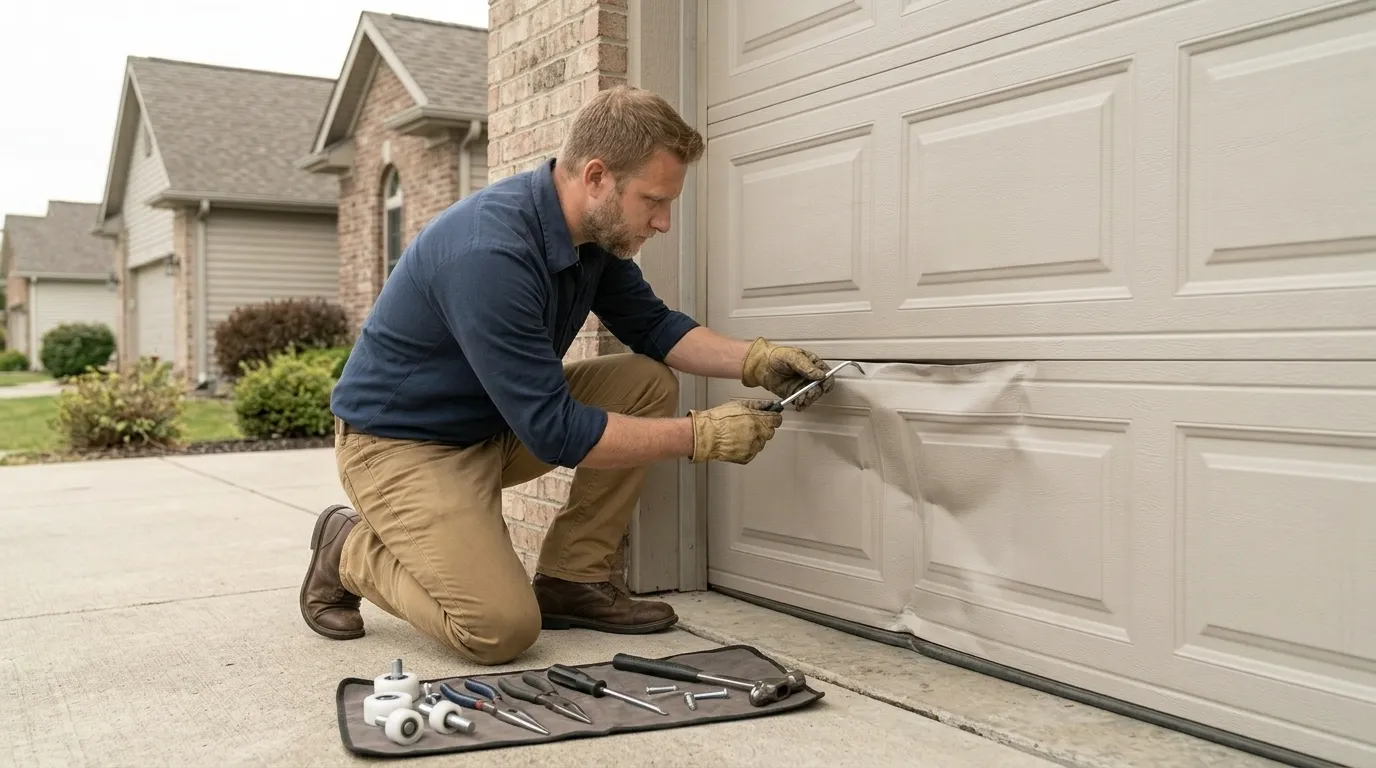
Palatine homes built between 1938 and 2009 carry original torsion hardware that wasn't made for Chicago winters. We fix the spring, cable, and track failures that come with that stock.
- Licensed & Insured
- Same-Area Service Calls
- Upfront Pricing
What Happens When You Call
-
1
Call or Request a Quote
Tell us what the door is doing and roughly how old the house is - that alone points us toward the likely part before a truck leaves.
-
2
On-Site Diagnosis
A tech checks the spring, cables, tracks, and opener in person and tells you plainly what is actually wrong.
-
3
Straight Price, No Surprises
You get a number before any work starts. It covers parts and labor, nothing added after the fact.
-
4
Fixed the Same Visit
Most repairs are done in one trip. If a part needs sourcing, we tell you that upfront instead of guessing.
The Cost of This Job
What you pay depends on what's actually broken and how old the hardware is. A snapped torsion spring on a door installed when the house was built in the 1960s or 70s is a different job than the same spring on a 1990s door, because the drum sizes and cable routing changed over that stretch. We don't quote a number over the phone before we've seen the drum, the winding cone, and the track condition, because Palatine's housing spans seven decades of different hardware standards and guessing costs you a return trip.
What we can tell you: parts availability is the swing factor. Original one-piece doors and their matched springs from the earlier end of that build range are harder to source than newer sectional door parts, and that shows up in the bill as a wait, not just a price. If your door was installed before the 1980s median for this area, expect us to check whether repair even makes sense against replacing the spring set and cables together, since doing one without the other on old hardware just moves the next failure a few months down the road.
We'll tell you straight if a repair isn't worth it before we start.
Why This Fails Locally
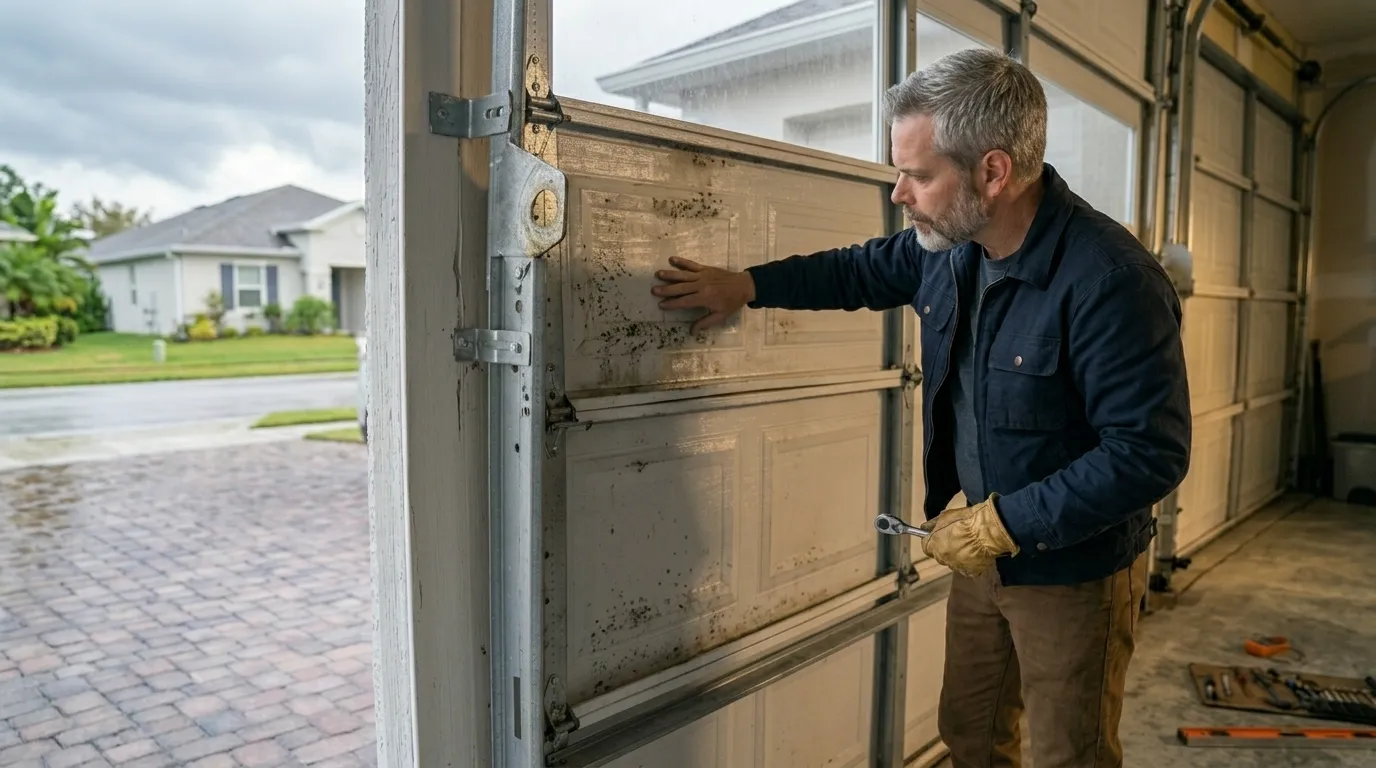
Palatine's housing stock runs from 1938 up through 2009, with most of it built in the 1980s and 90s. That matters for garage doors because torsion springs are rated for a cycle count and a temperature range, and a spring wound in a factory forty years ago wasn't engineered for the cold snaps this area gets now. This is a severe cold climate zone, and steel contracts in the cold - a spring already fatigued from age loses tension faster once the temperature drops, and it tends to let go on the first hard cold morning of the season rather than gradually.
Doors installed in the earlier decades of that 1938-2009 range are the ones we see most for snapped springs and frozen rollers, because the hardware is original and has never been re-torqued or replaced. Newer doors from the 1990s and 2000s fail differently - usually a worn cable or a bent track from an opener that's fighting a door that's slightly out of balance. Either way, the failure mode traces back to the age of the hardware sitting behind the panel, not just bad luck.
The Symptom
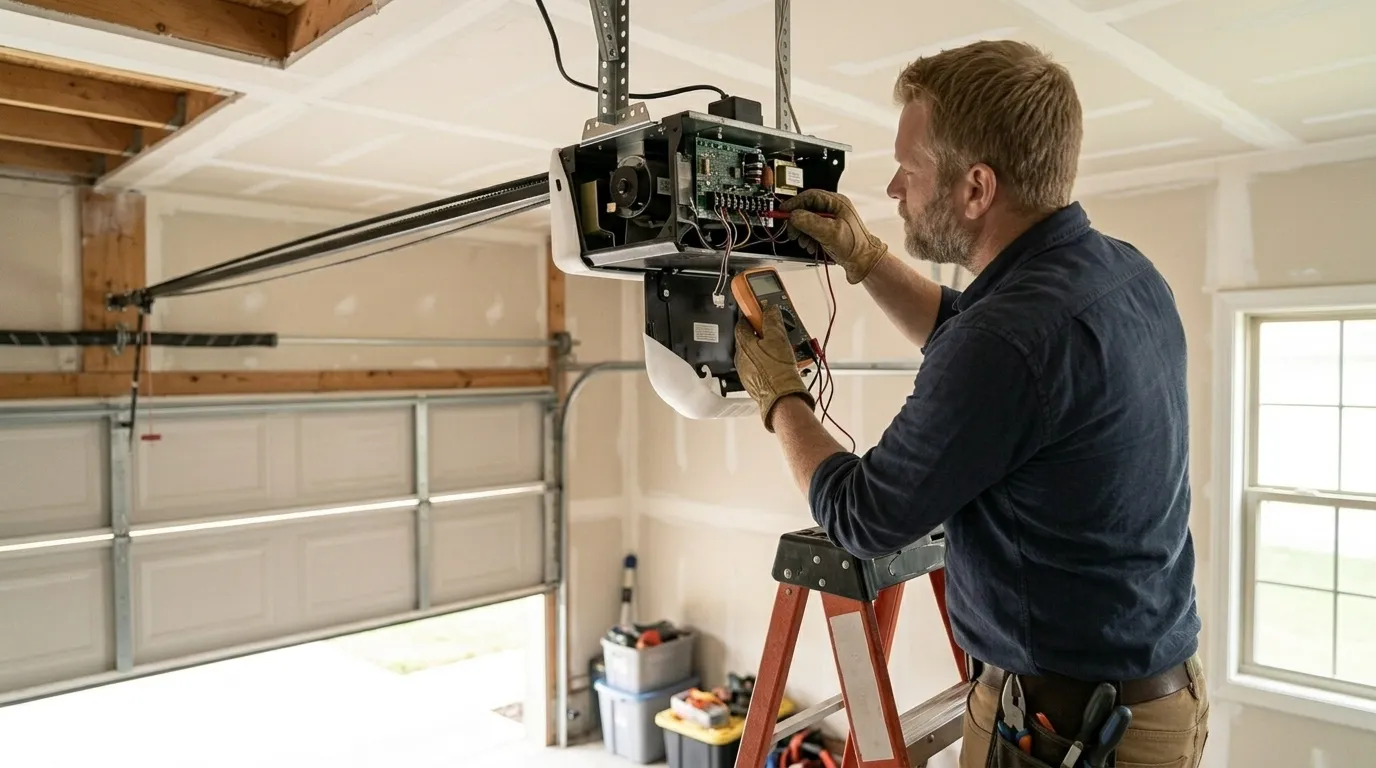
Most calls start the same way: the door won't budge, or it moves a few inches and stops. If you hear a loud bang from the garage before that happens, that's almost always a torsion spring letting go - it's sudden, it's loud, and the door will feel dead heavy on manual release afterward. A door that closes unevenly, dropping faster on one side, points to a cable or a bottom bracket rather than the spring.
Cold mornings make both worse: metal contracts, lubricant thickens, and a door that was marginal yesterday can seize today. If your opener runs but the door doesn't move, don't keep hitting the button - that strains the gears and the trolley for no reason. Note whether the noise happened when the door was in motion or sitting still, and whether it's a wood, steel, or aluminum panel door, since that changes which parts we bring on the truck.
Booking a Visit
Call and describe what you're hearing and when it happens - that's the fastest way for us to bring the right spring size and cable length on the first trip instead of a second one. We work throughout the Palatine area and the surrounding towns within a few miles, including Inverness, Deer Park, Kildeer, Wheeling, and Mount Prospect.
Given the age spread of housing out here, from homes built in the late 1930s through ones finished in 2009, we ask a few questions up front about roughly when the house or the door was installed, since that alone narrows down what's likely wrong before we're standing in the driveway. You can also start on our homepage if you want to see the full range of what we handle before you call.
Talk to a Technician Before You Book
Describe what the door is doing and get a straight answer on what it likely needs.
Other Ways We Can Help
Jobs Like Yours
Recent work from this service line.
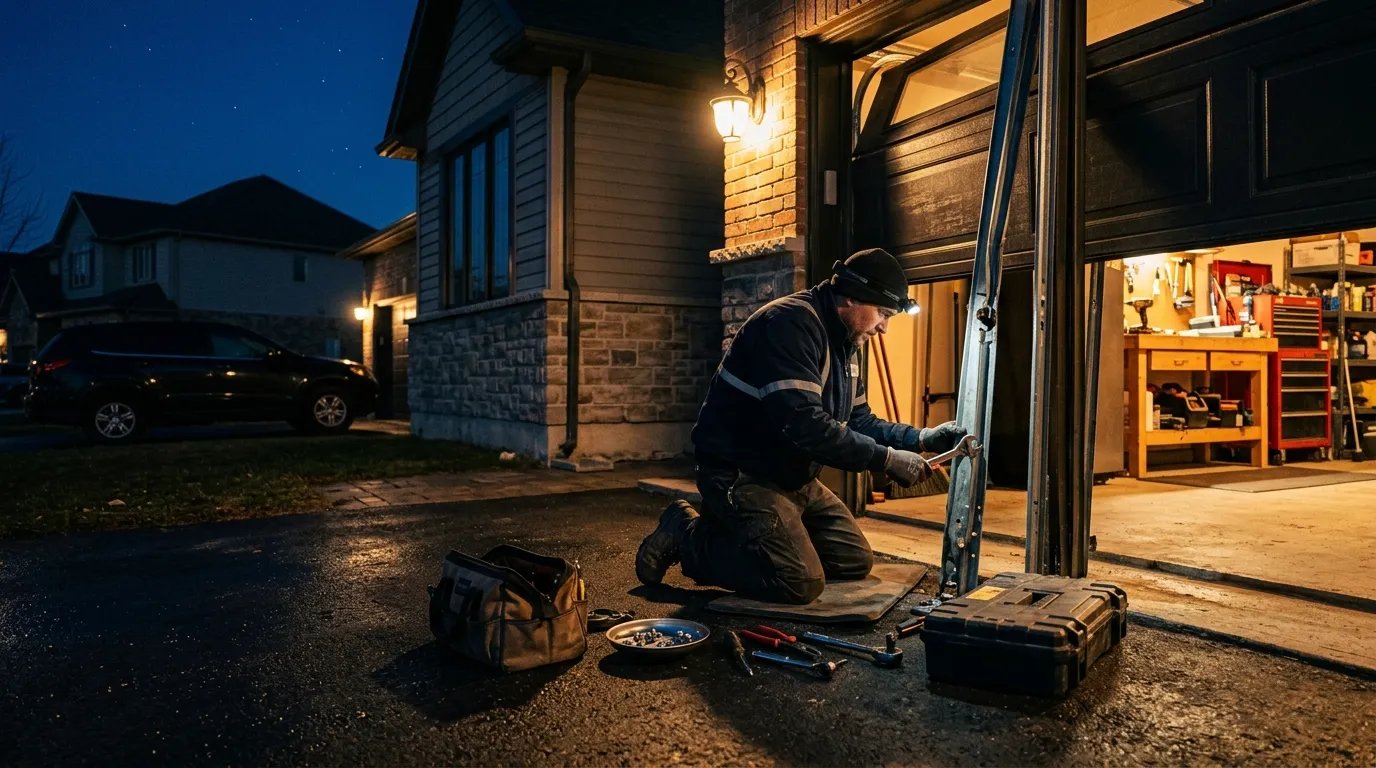
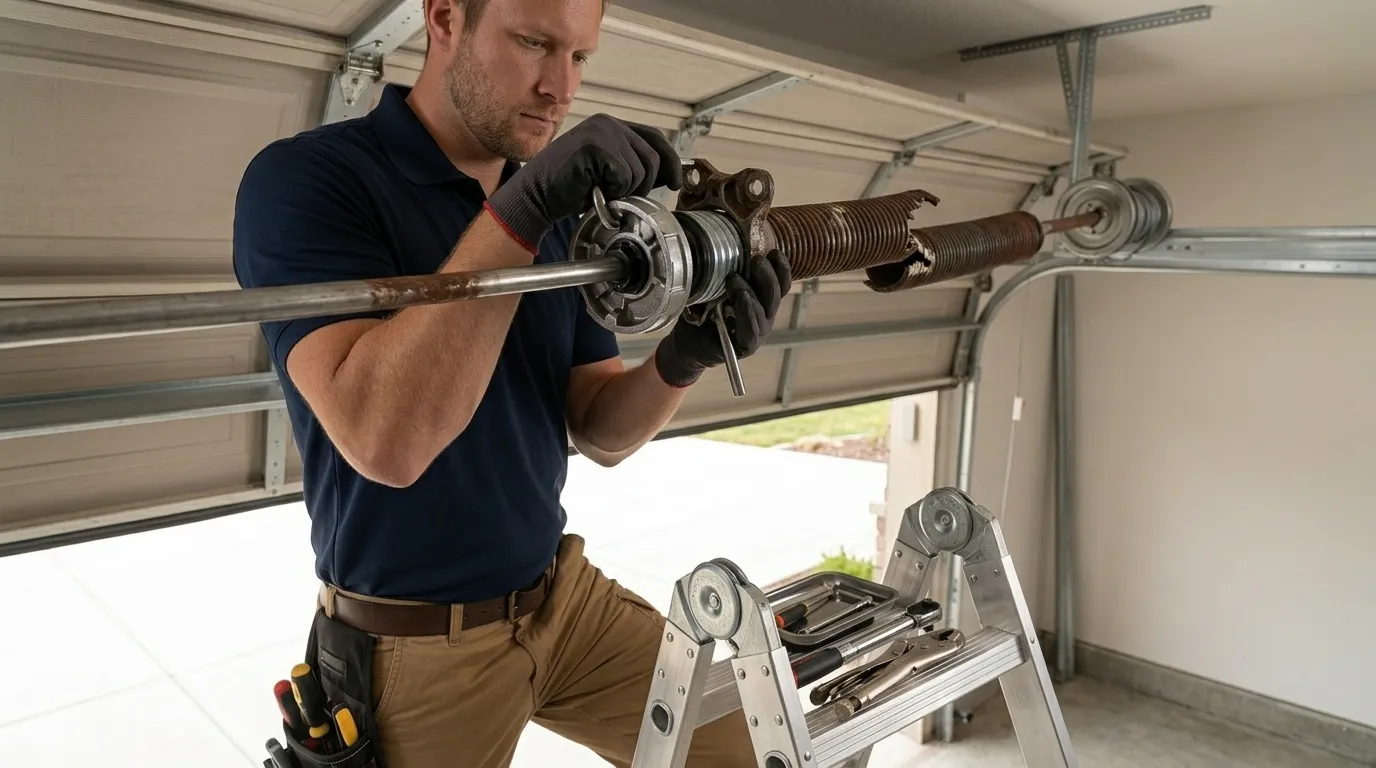
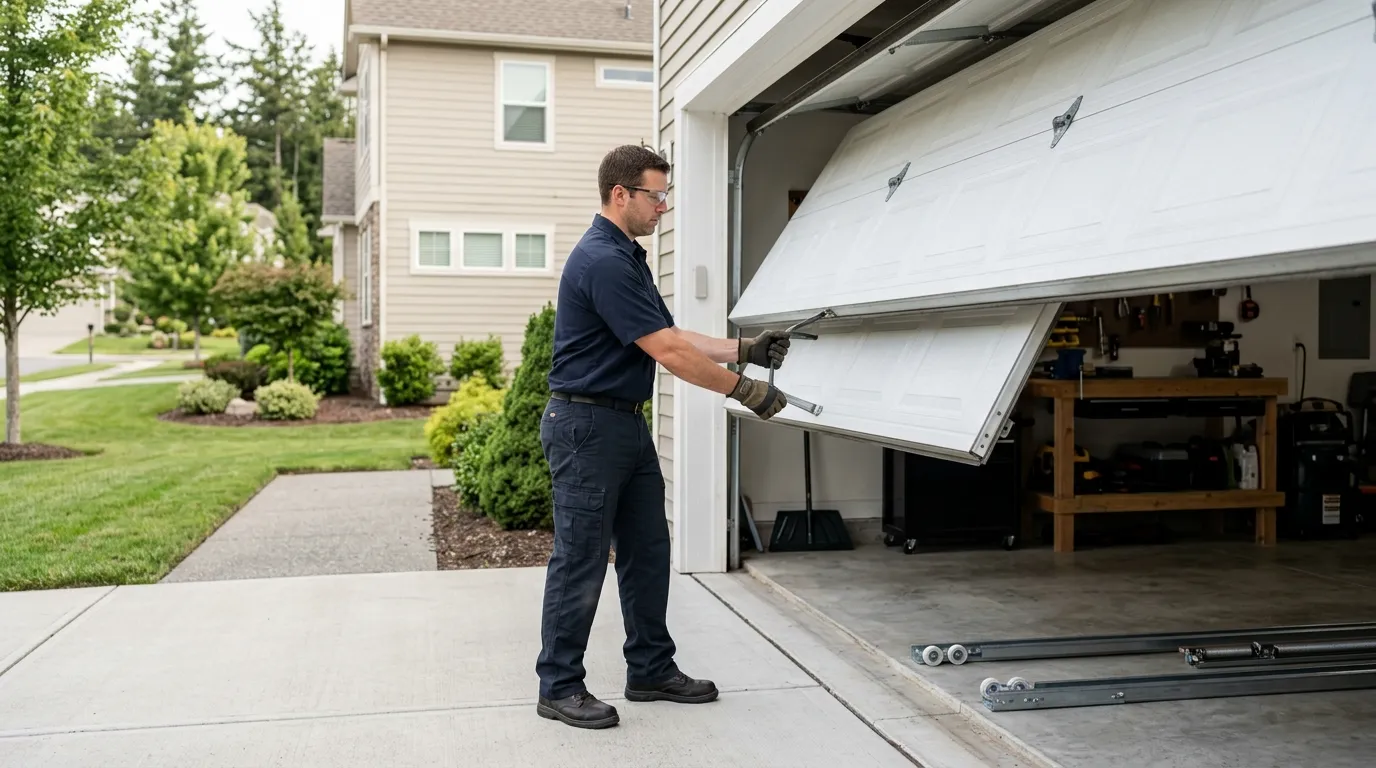
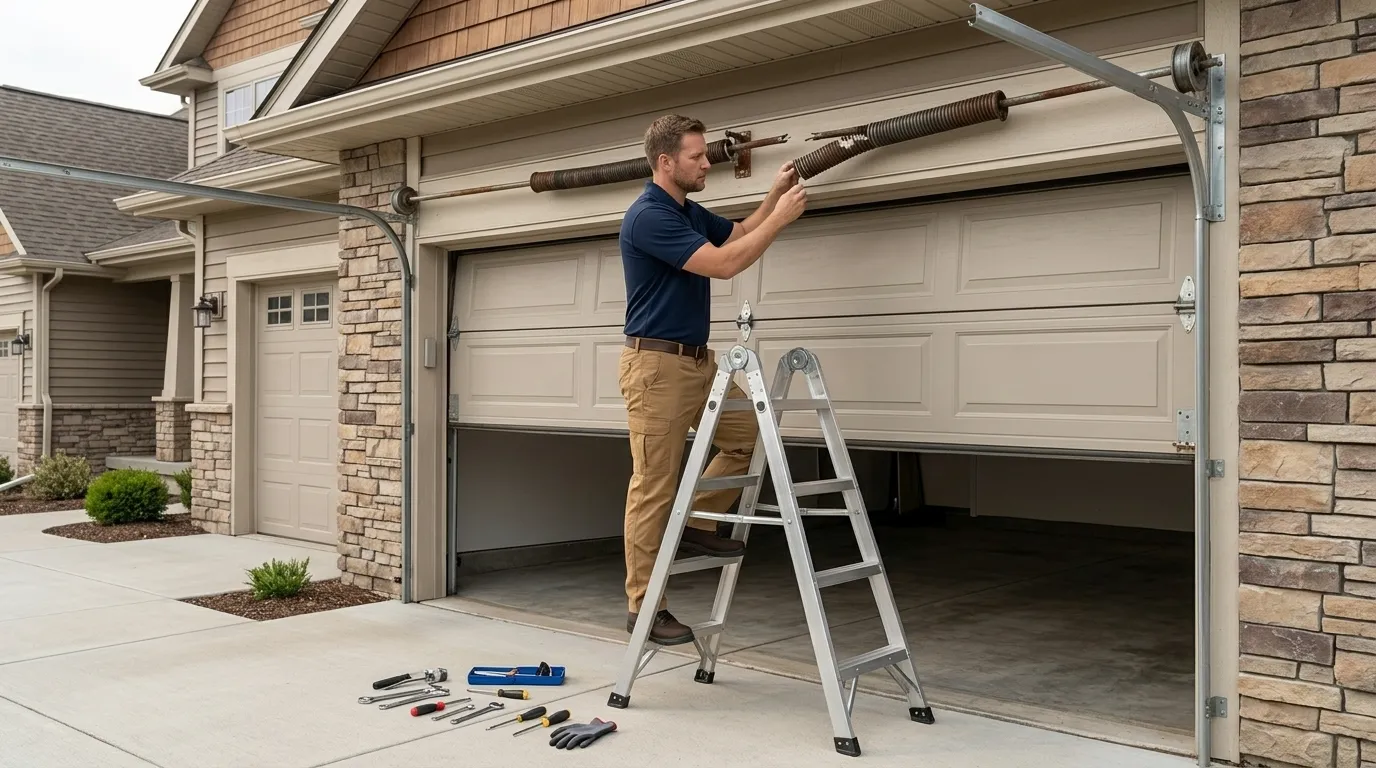
Why Palatine Calls Us
Frequently Asked Questions
Why did my spring break on a cold morning and not during the day?
Steel loses some flexibility as it gets colder, and a spring that's already fatigued from years of cycling has less margin to absorb that. It's already weak; the cold just tips it over. This is common enough in this climate that we see a jump in spring calls after the first hard freeze each year.
Is my door too old to repair instead of replace?
Depends on the hardware, not just the age. Some doors from the earlier end of the 1938-2009 range still have solid panels and just need new springs and cables. Others have worn tracks and rollers on top of the spring failure, and at that point replacement usually makes more financial sense than patching it twice.
Do you work outside Palatine itself?
Yes, we cover the surrounding area including towns like Inverness, Deer Park, Kildeer, Wheeling, and Mount Prospect, generally within about ten miles.
How fast can someone come out?
We don't have a fixed response time to quote here - call and we'll tell you what's realistic for your day based on the current schedule.
Need Garage Door Repair for Palatine's Older Torsion Hardware?
Call now for straight answers on cost and timing.