
Palatine Garage Door Guide
Should You Fix That Old Palatine Garage Door, or Replace It
Palatine's housing runs from 1938 to 2009, most of it 1980s and 90s stock. Here's how to tell if your old door is worth repairing or replacing.
- Licensed & Insured
- Same-Area Service Calls
- Upfront Pricing
What Is Going On
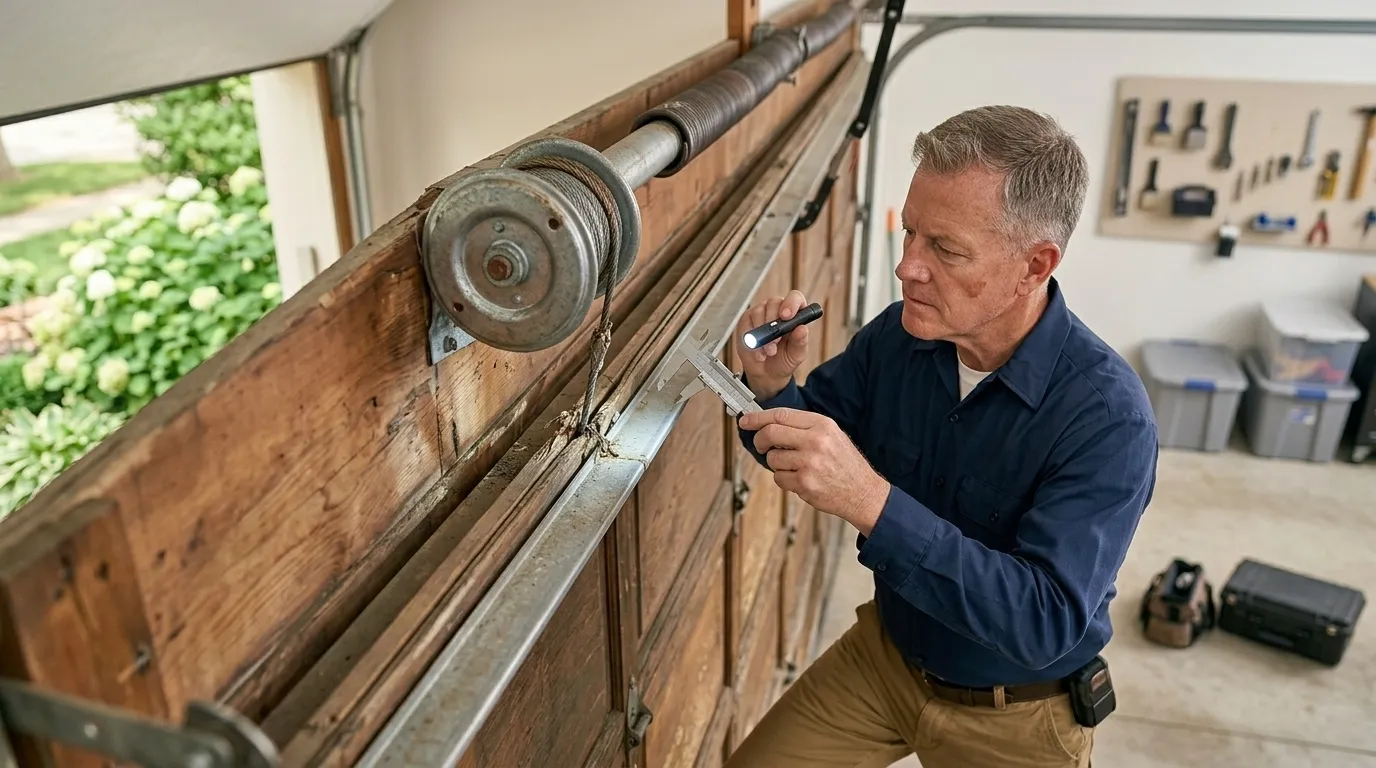
Palatine's housing stock spans 1938 to 2009, but the bulk of it dates to the 1980s and 90s, spread across the area's 86 named subdivisions. That means a lot of doors out there are original or close to it: steel panels with foam laid in later, torsion springs sized for hardware nobody double-checks anymore, and rollers that have outlived three or four openers already bolted onto the same track.
When a door from that era starts acting up, the question isn't whether something's worn out. It's whether the thing that's worn out is worth chasing, or whether it's telling you the whole unit is done.
The honest answer depends on what's actually failing. A cracked panel on a door that's otherwise sound is a different job than a spring that's snapped because the whole system has been fighting rust and misalignment for years.
On doors from the 1980s specifically, we often find the original springs still installed, which by any measure have run well past a normal service life. That's not a scare line, it's just what 40-plus years on the same coil looks like.
What the Weather Here Does to It
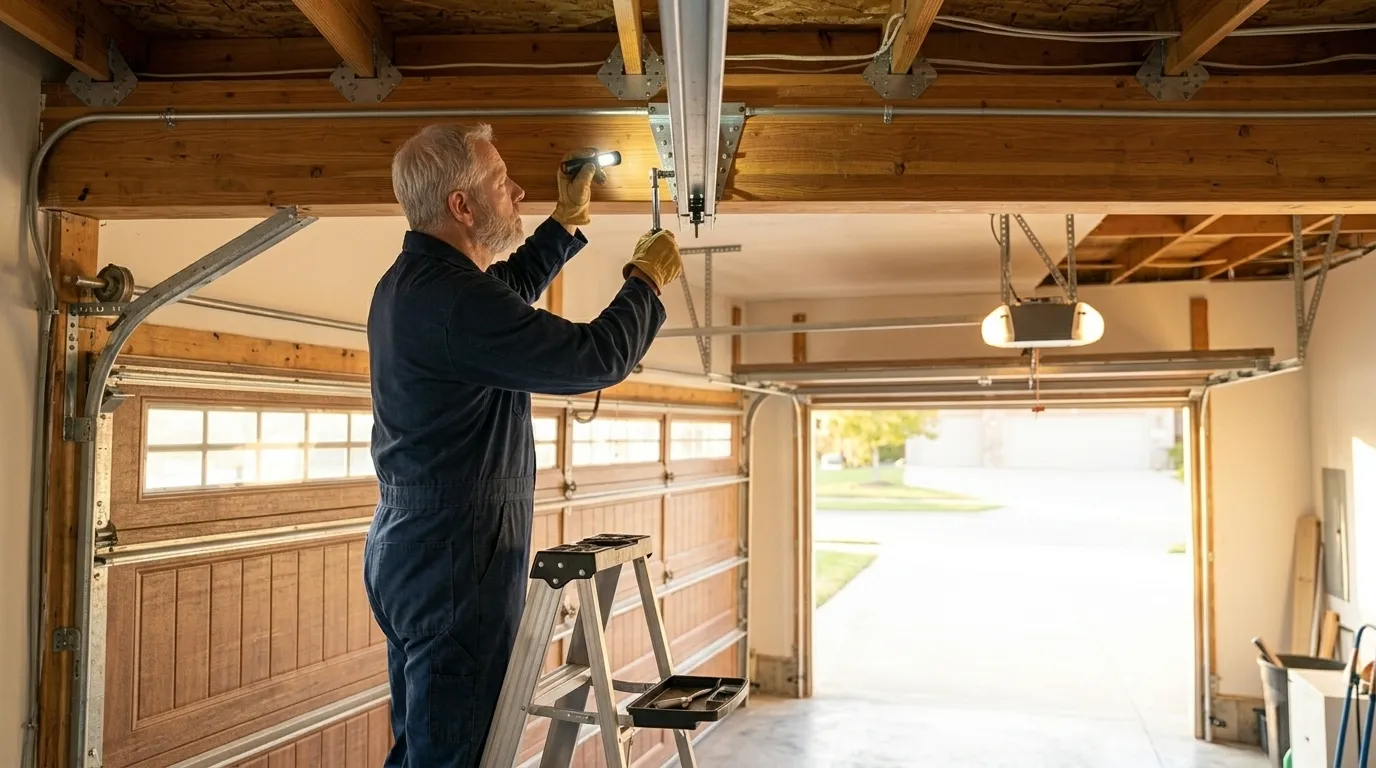
Palatine sits in a cold, severe climate band, and that matters more for an older door than almost anything else. Steel contracts in deep cold, and a torsion spring that's already fatigued from decades of cycling is far more likely to let go on a sub-zero morning than in July. The bottom seal on an older door, especially one that predates better weatherstripping designs, hardens and cracks in that kind of cold, letting wind-driven snow work its way into the track.
Openers take the hit too. A motor built for a door that moved easily in 1985 has to work harder now that the same door has decades of grit in the tracks and springs that have lost tension. In cold weather, that strain compounds: the opener pulls against a heavier, stiffer door and the whole system wears faster than it would in a milder climate.
If your door is groaning louder in January than it did in September, that's not your imagination. That's the cold finding every weak point the age already built in.
The Cost of This Job
We don't publish flat prices for this kind of work because two doors that look the same age can need completely different repairs. What we can tell you is what drives the decision.
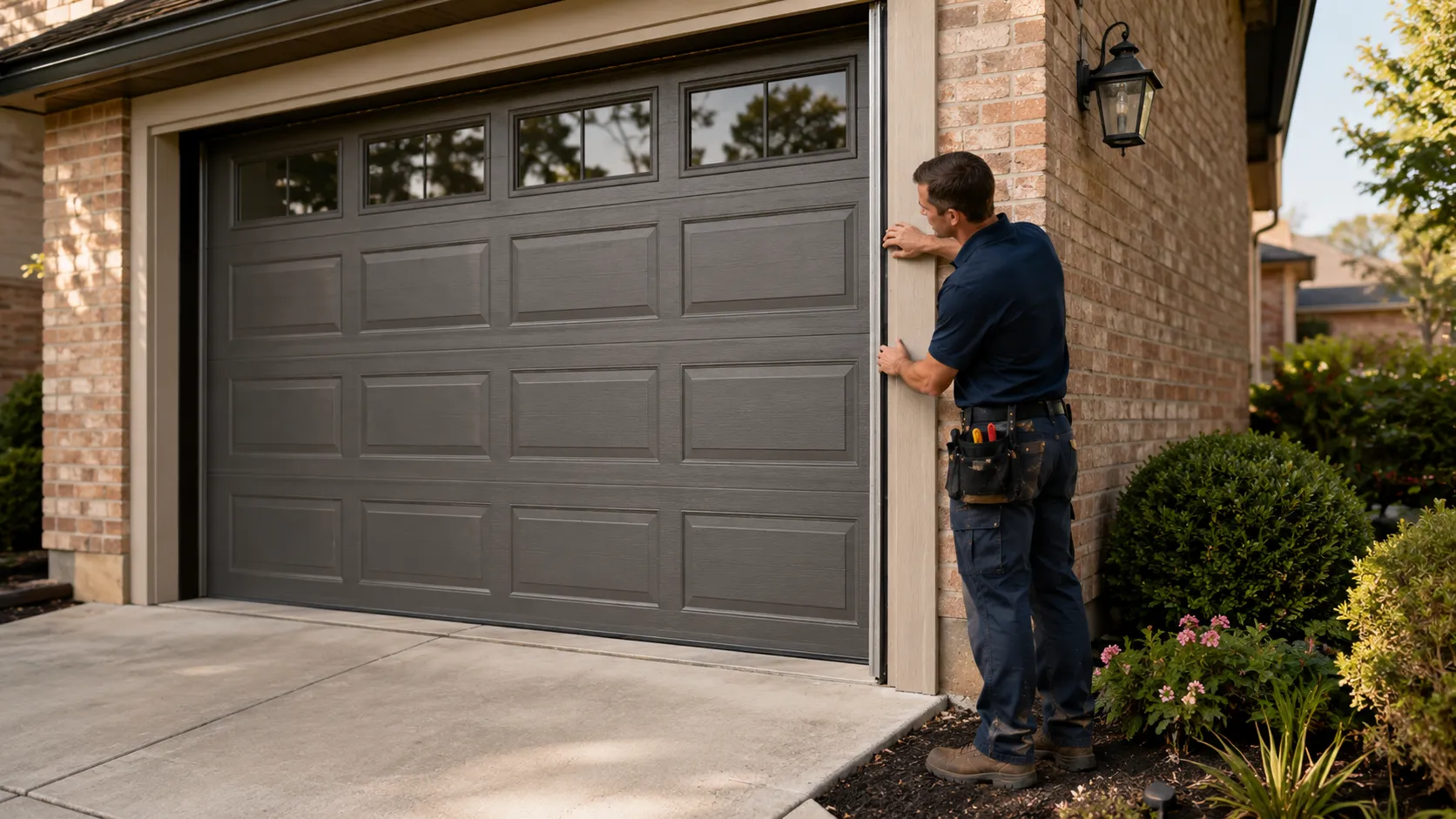
If the door itself, the panels and track, is in good shape and it's just a spring or a set of rollers, that's a repair worth doing regardless of the door's age. If the panels are dented, the track is bent from years of an unbalanced door dragging on it, or the opener is straining hard enough that you can hear it, you're often better off putting that money toward a new door instead of patching an old one.
Palatine's median household income sits at $110,844, which is enough that most homeowners here aren't choosing based on squeezing out one more year. They're choosing based on which option actually holds up. We'll tell you straight when a repair is the right call and when it isn't, even if that means a smaller job than you expected.
Leaving It Alone
The risk with an older door isn't usually that it fails quietly. It's that it fails at the worst moment, and in this climate that's often a cold morning when a fatigued spring finally gives out under a door that's been fighting stiff, cold steel for years. A spring that snaps while the door is open can drop it hard enough to bend the track or crack a panel, turning a simple spring swap into a bigger repair.
There's also a parts issue that's specific to houses of this age. A door installed when most of Palatine's housing went up, in the 1980s and 90s, may use panel sizes or hardware that isn't made anymore.
If one panel cracks on a door like that, we may not be able to match it exactly, and the honest fix is a full replacement rather than a patch that looks wrong for years. We'll always check before we tell you it can't be matched, but it happens more often on doors from this era than people expect.
How We Can Help
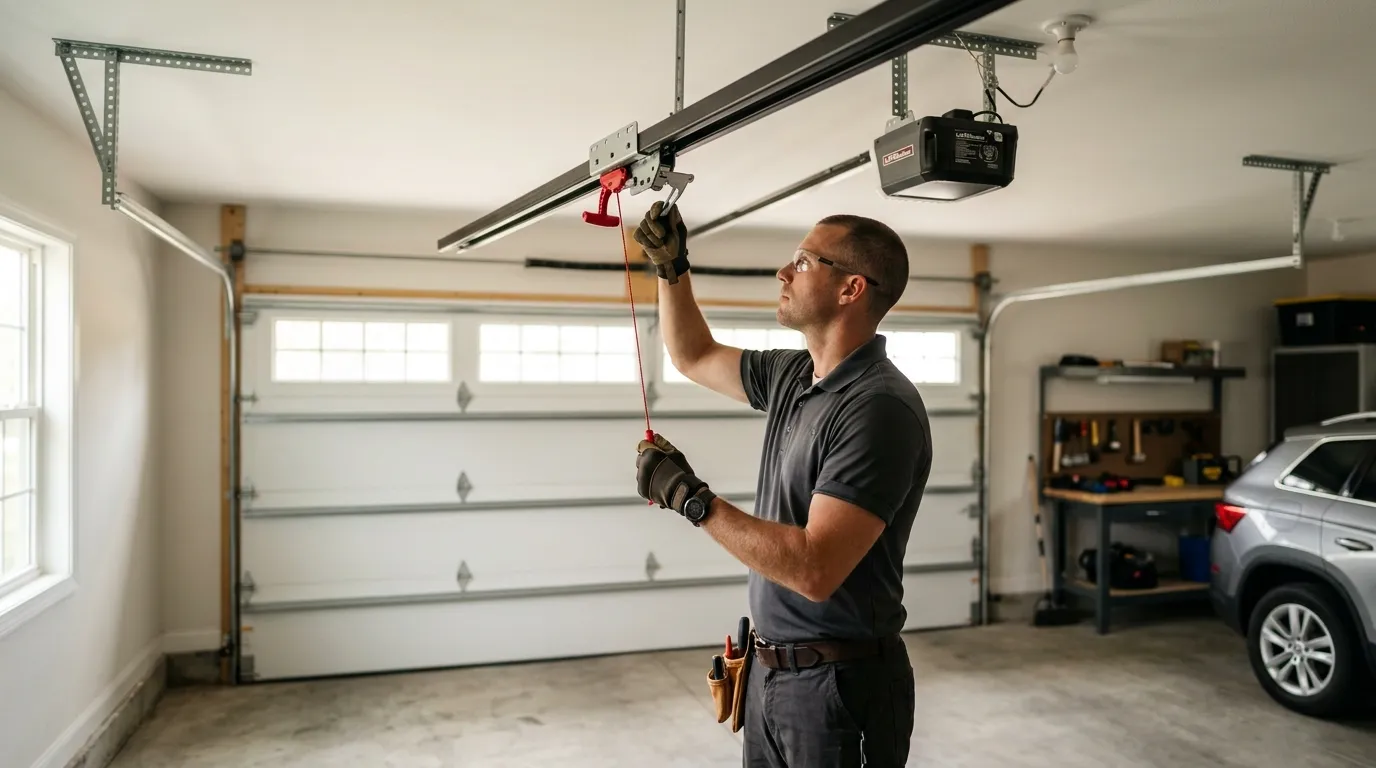
Garage Door Repair
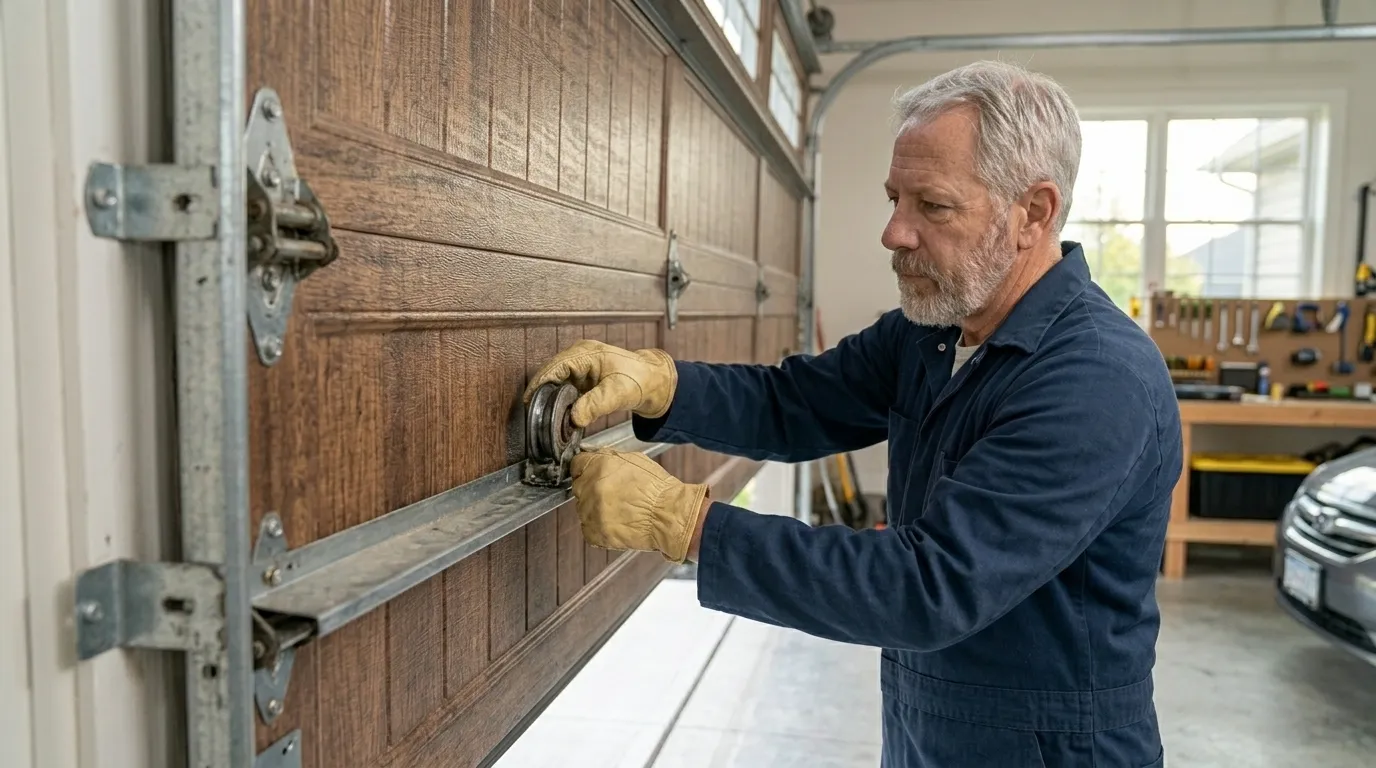
Springs, cables, tracks, rollers, and openers fixed by a tech who explains the problem before touching anything.
Learn more →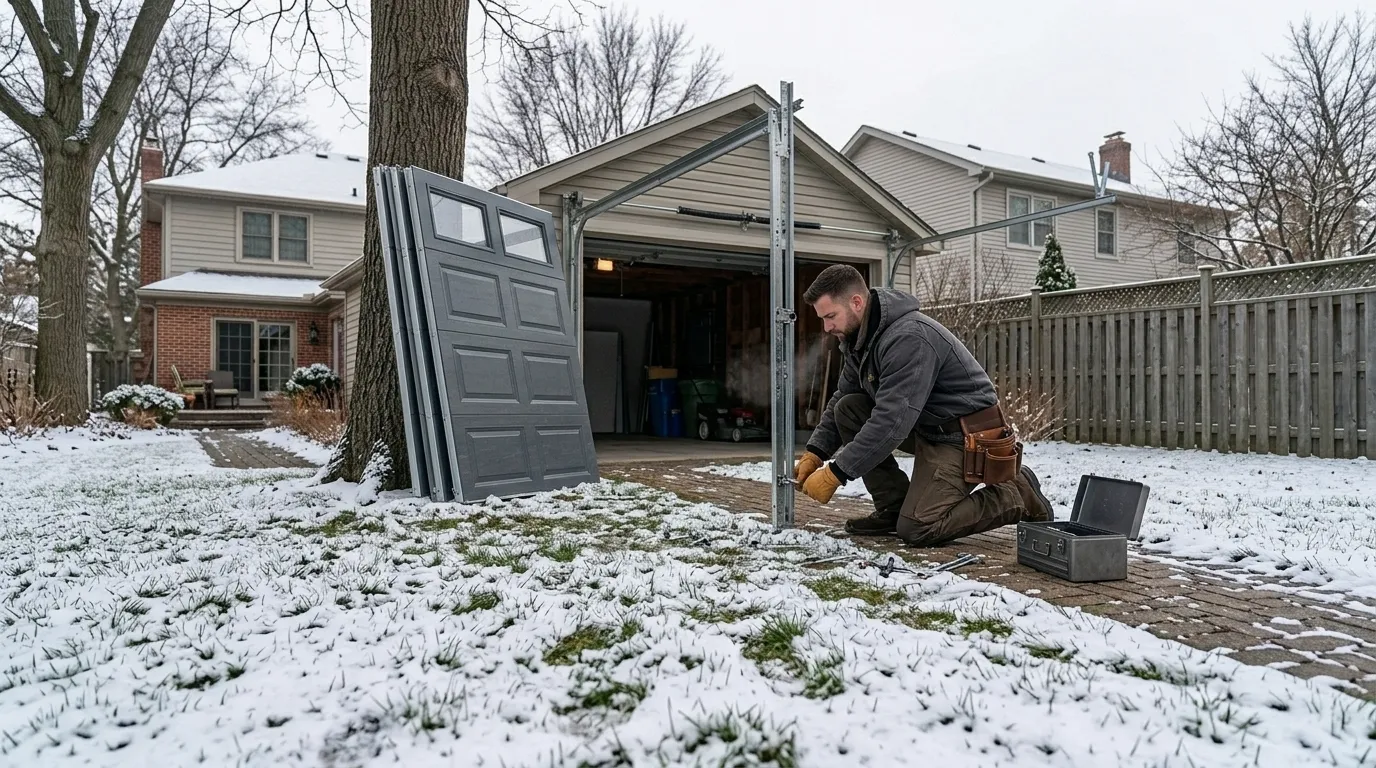
Garage Door Installation
New sectional doors sized and installed for the housing stock actually built in this area.
Learn more →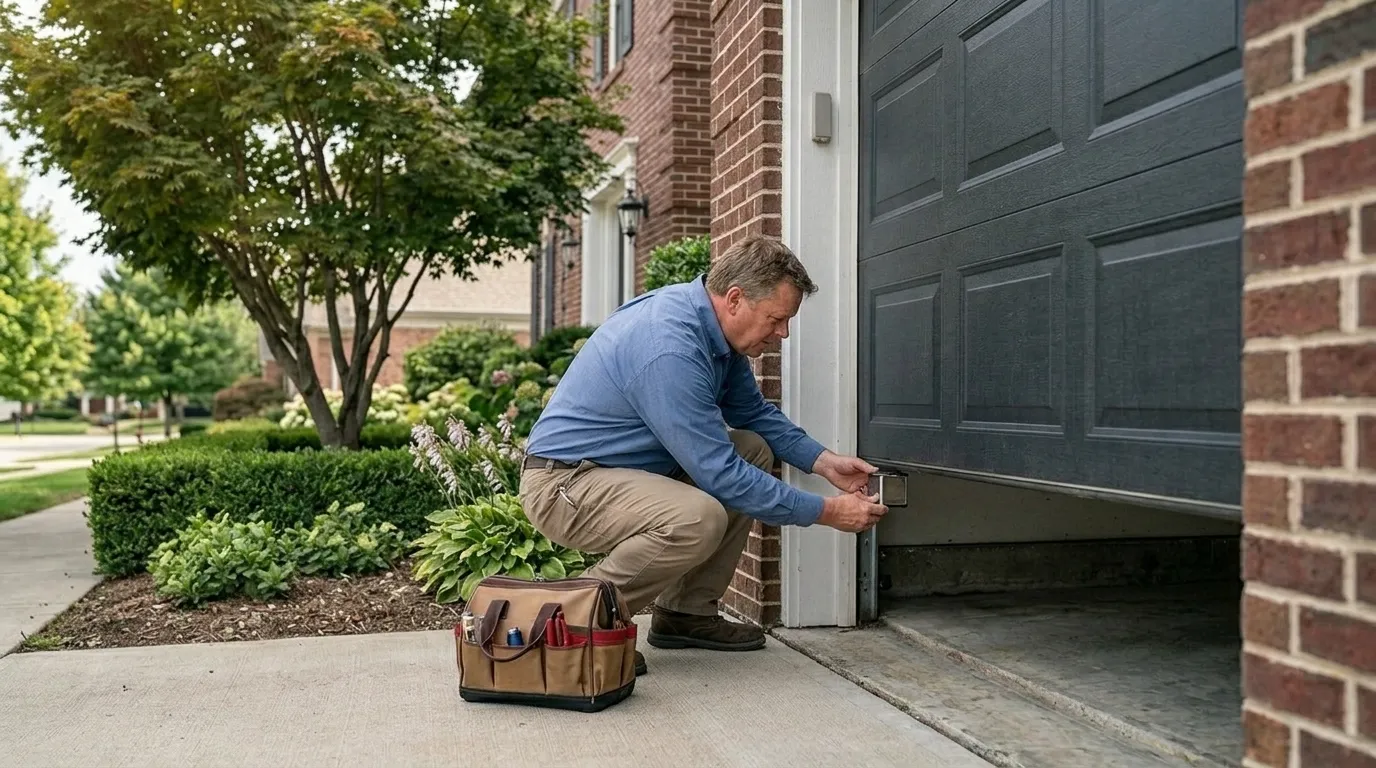
Garage Door Service
Tune-ups, lubrication, and safety checks that catch a small problem before it becomes a service call.
Learn more →Frequently Asked Questions
My door is from the 1980s. Is it too old to repair?
Not automatically. Age alone doesn't rule out a repair, condition does. If the panels and track are sound and it's a spring, opener, or roller issue, a repair usually makes sense. If the door is dented, warped, or the track is bent, replacement is usually the better call given how common that housing era is here.
Why did my spring break in the middle of winter?
Palatine's cold, severe climate is hard on aging springs. Steel contracts and stiffens in deep cold, and a spring that's already fatigued from years of cycling is far more likely to fail under that added stress. It's not random; cold weather is when weak springs usually show themselves.
Can you match panels on an older door if one cracks?
Sometimes, but not always. Doors from the 1980s and 90s, which make up most of the housing stock here, sometimes use panel styles that aren't made anymore. We check before promising a match. When we can't match it, a full replacement is the honest recommendation instead of a mismatched patch.
Have a Door That Needs a Second Opinion?
Call and describe what it is doing - we will tell you what it likely is.