
Palatine Garage Door Guide
Why Safety Sensors Drift Out of Line on Palatine Garage Doors
Why garage door safety sensors drift out of alignment in Palatine, IL homes built from the 1930s through the 2000s, and what our cold winters do to them.
- Licensed & Insured
- Same-Area Service Calls
- Upfront Pricing
What Is Going On
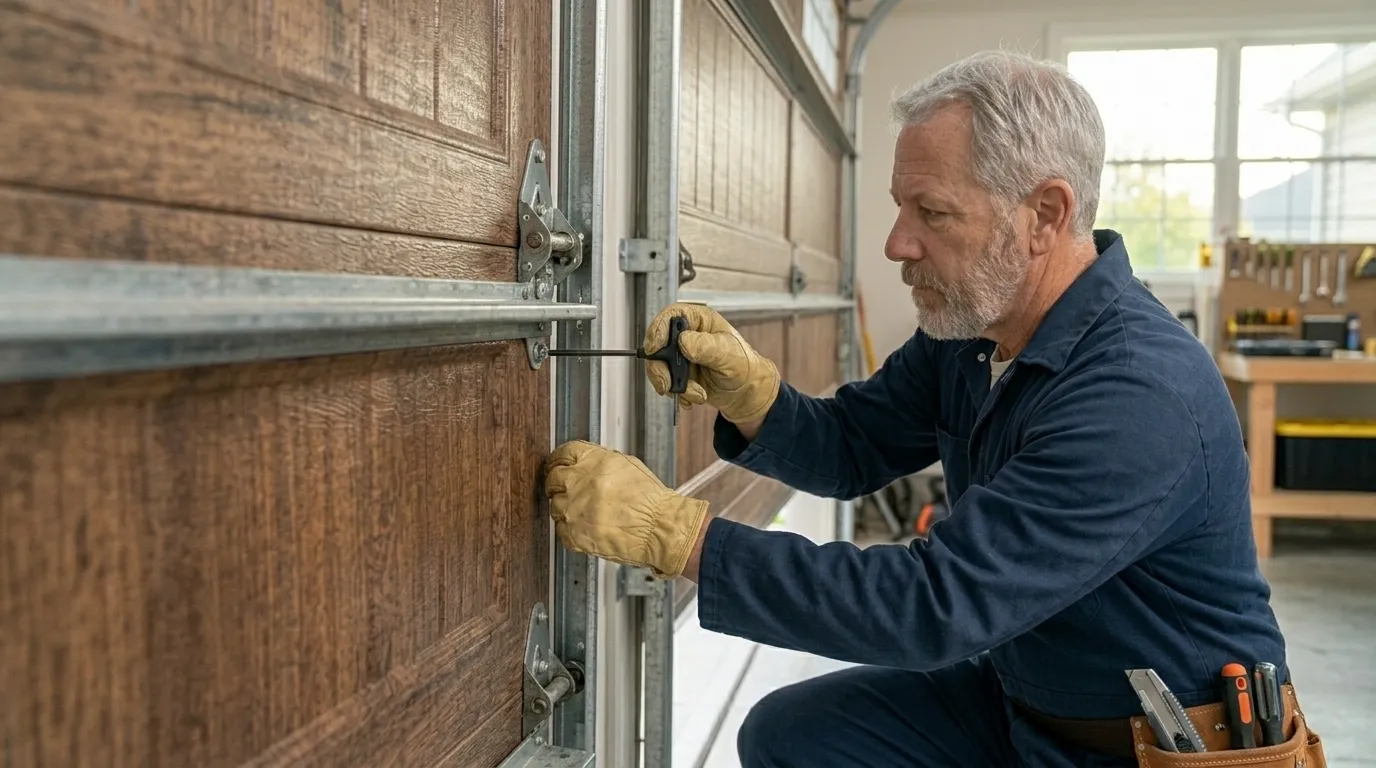
The two small boxes at the bottom of your track, roughly knee height, are the safety sensors. They shoot an infrared beam across the opening, and if something breaks that beam while the door is closing, the door stops and reverses. When people call us saying the door "won't close all the way" or "closes then jumps back up for no reason," the sensors are the first thing we check, not the opener.
Drift means the beam is no longer lined up eye-to-eye between the two units. It doesn't take much - a fraction of an inch at the sensor translates into a wide miss across a two-car opening.
In houses through here that went up anywhere from 1938 to 2009, with a lot of that stock dating to the 1980s and 90s, the brackets holding those sensors are often screwed into wood door jambs or track uprights that have moved slightly over the decades. Settling, a bump from a bike or a car mirror, a loose wing-nut fastener - any of it nudges the aim off.
We don't treat this as a mystery. It's almost always mechanical, and it's almost always fixable without new hardware.
What the Weather Here Does to It
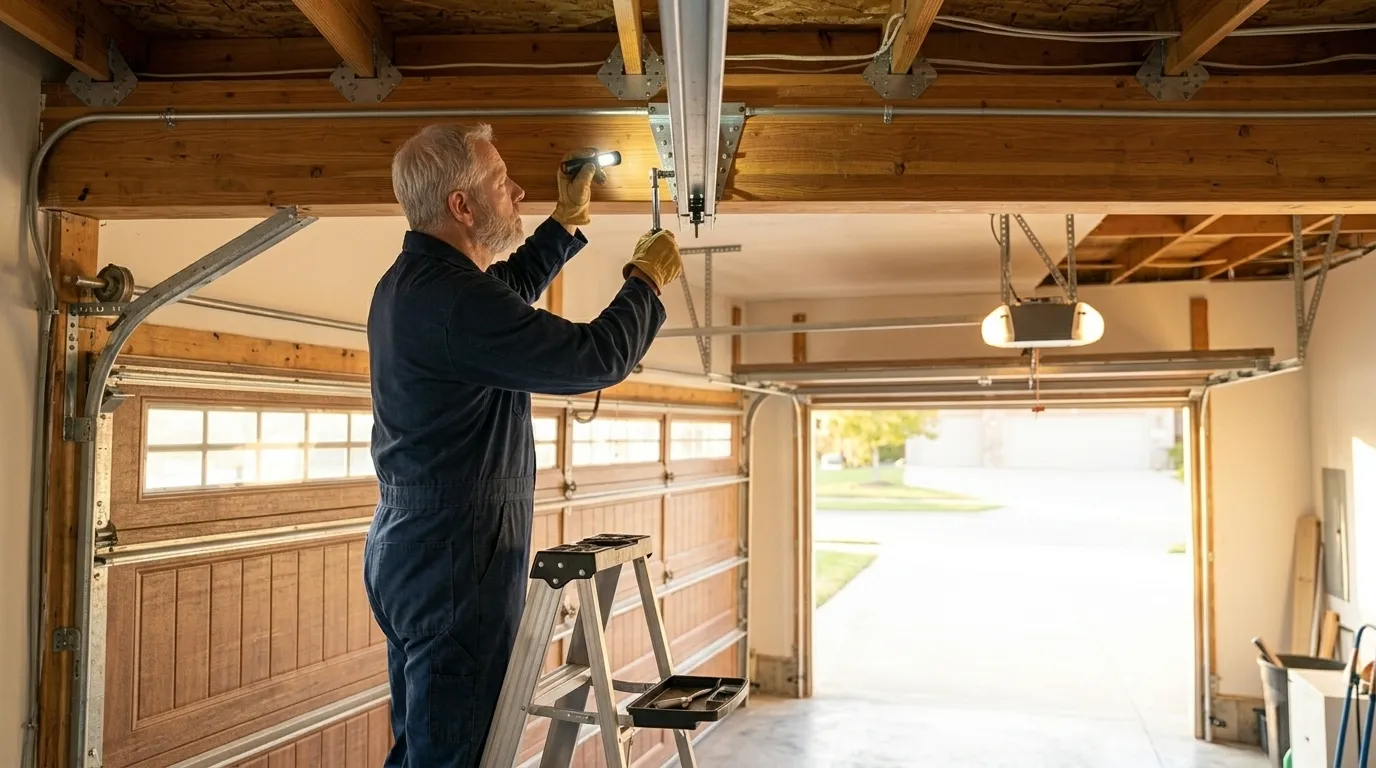
This area sits in a cold-severe climate band, and that matters more for sensors than most people expect. The slab under the garage floor and the framing around the opening both move a little through a hard freeze-thaw cycle, winter after winter. A bracket that was dead-on in October can be off by enough to matter by February, because the wood or metal it's anchored to expanded, contracted, and shifted with the ground underneath it.
Cold also fogs the lenses. Warm garage air meeting a cold sensor eye puts a thin film of condensation right across the glass, and the opener reads that as an obstruction or a lost signal - the door won't close, or it closes and immediately backs off. Road salt tracked in on tires does something similar over a season, leaving a haze on the lens that cuts the beam's strength without blocking it outright.
In houses built mid-century through the 1980s and 90s, original sensor brackets are frequently the thinnest gauge stamped metal made at the time, and that gauge doesn't hold its bend the way newer bracket stock does once a Palatine winter starts working on it.
The Cost of This Job
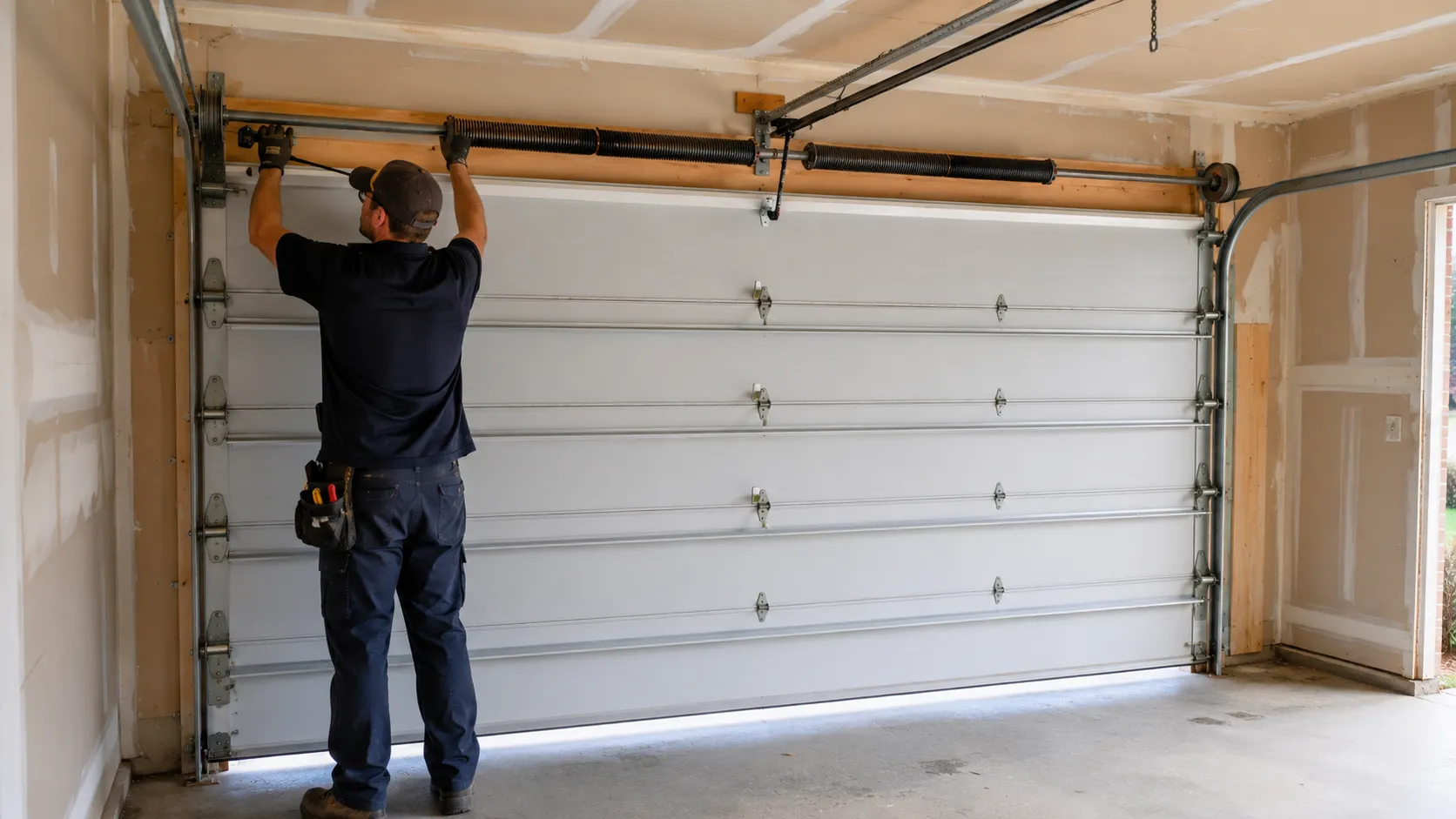
A sensor alignment call is usually quick - most of the time is spent finding why it drifted, not fixing the drift itself. Realigning two sensors that are simply knocked out of true is a short visit. Replacing a bracket that's rusted through or cracked from being bumped one too many times adds a bit more, since we're drilling new anchor points into the jamb rather than just loosening two screws.
We don't have a flat number to hand you here without seeing the door - a wood-frame opening in an older Palatine-area house is a different job from one set into a newer masonry opening. What we can tell you is that sensor work almost never requires replacing the opener itself. If a technician tells you the whole unit needs swapping over a sensor issue, get a second look.
The honest limitation: we can't quote sensor repair pricing sight unseen, because the bracket, the mounting surface, and how long the fault has been ignored all change the scope once we're standing in front of it.
Leaving It Alone
Some homeowners get tired of the door refusing to close and just unplug or bypass the sensors so the door will shut on command. We won't do that for you, and we'd rather you didn't do it either. The sensors are the one part of the system standing between a closing door and a kid, a pet, or a bumper that's in the way at the wrong second.
A misaligned sensor is also cheap to fix compared to what it's protecting against - a door that slams onto something it shouldn't. If your opener has started reversing on its own, or the light on one sensor is blinking instead of steady, that's the system telling you the beam is broken before anything worse happens.
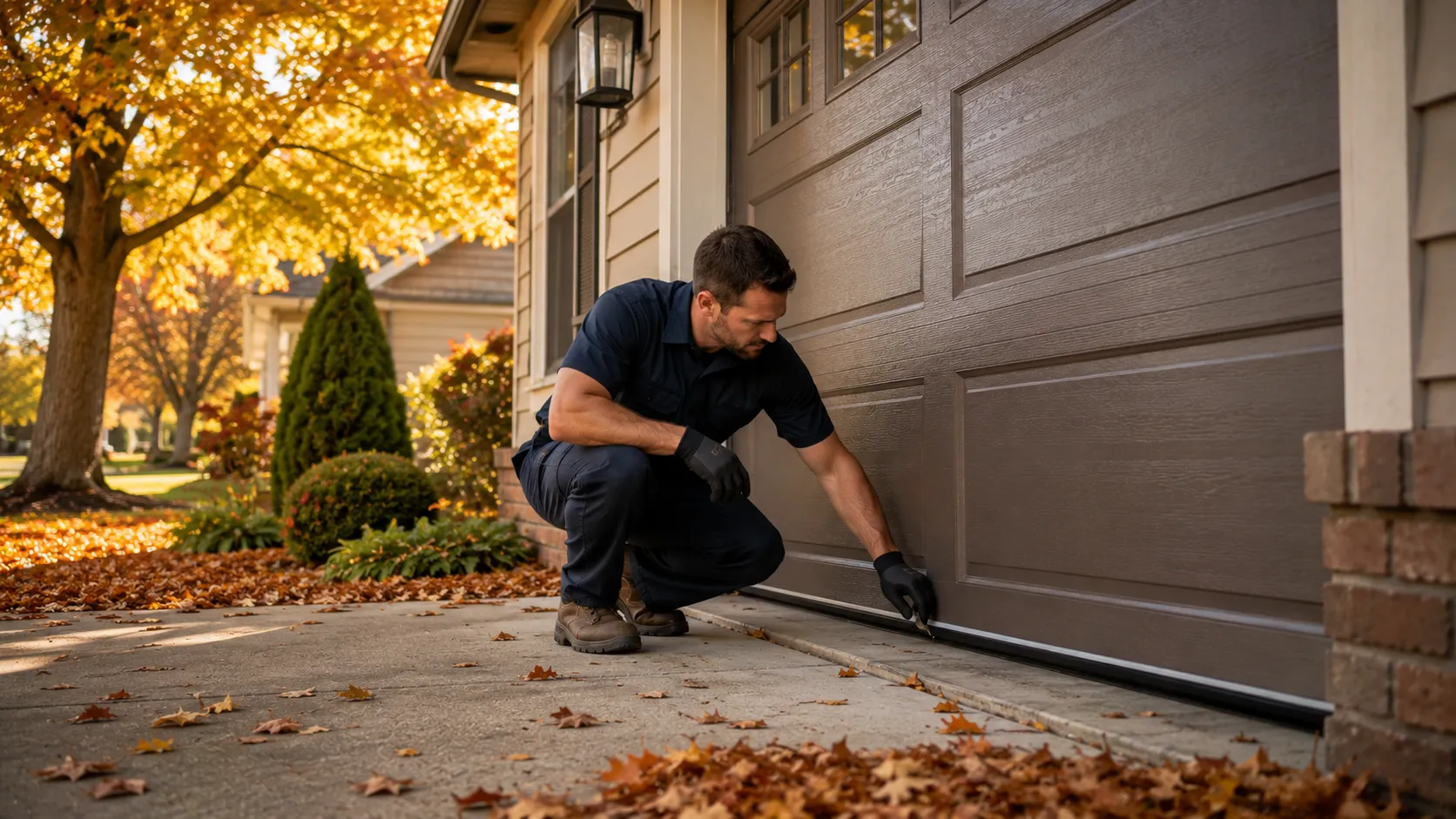
Given how many houses in this area were built decades ago and have gone through repeated cold-severe winters since, a once-a-year check of sensor alignment before the hard freezes set in is worth the ten minutes it takes.
How We Can Help
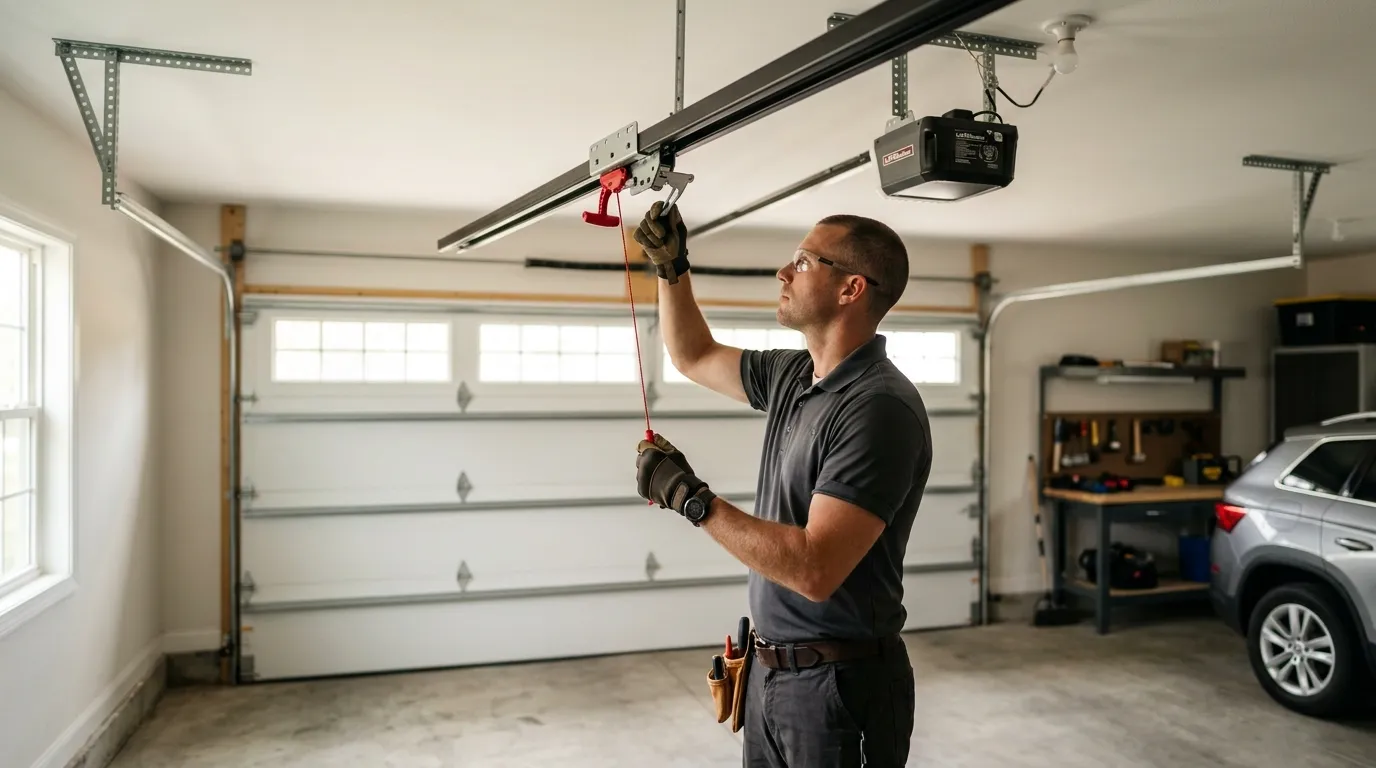
Garage Door Repair
Springs, cables, tracks, rollers, and openers fixed by a tech who explains the problem before touching anything.
Learn more →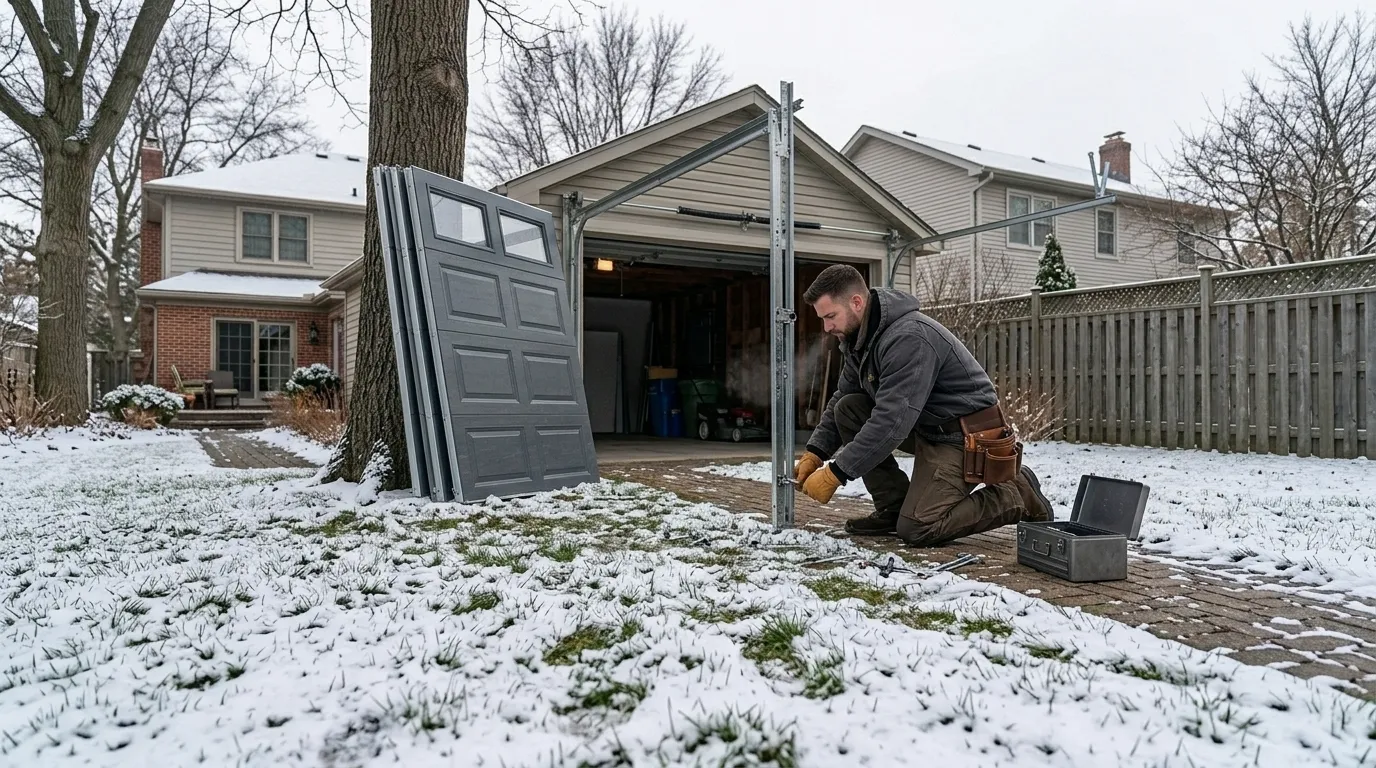
Garage Door Installation
New sectional doors sized and installed for the housing stock actually built in this area.
Learn more →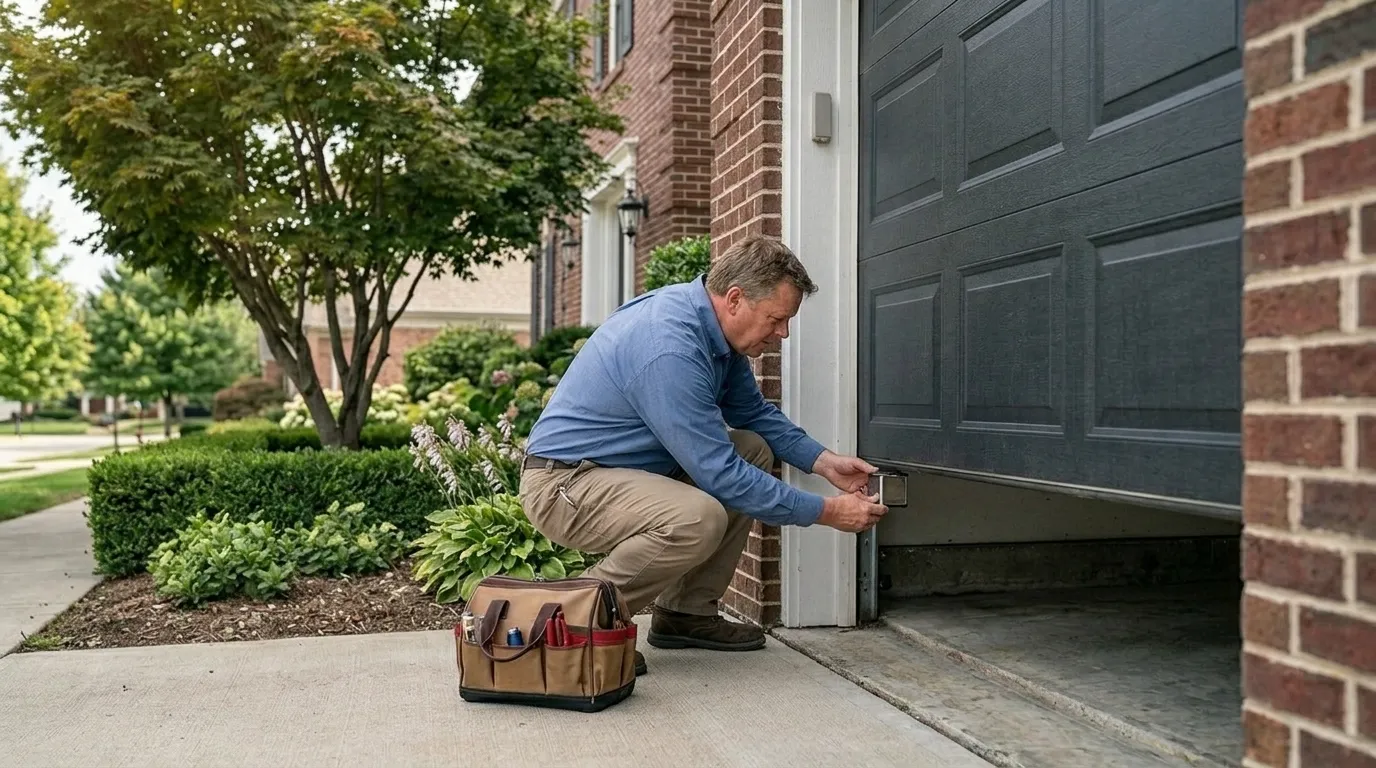
Garage Door Service
Tune-ups, lubrication, and safety checks that catch a small problem before it becomes a service call.
Learn more →Frequently Asked Questions
Why does my garage door close partway then go back up?
That's almost always a sensor reading an obstruction that isn't really there - fog on the lens, a hairline misalignment, or something reflective in the beam's path. In this climate, condensation from warm-to-cold air swings is a common culprit through winter. It's rarely the opener itself.
Can cold weather really move a sensor bracket?
Yes. Through a cold-severe winter, the slab and framing around a garage opening go through repeated freeze-thaw movement. A bracket screwed into wood jamb that shifts even slightly changes the sensor's aim, and across the width of a two-car door that small shift is enough to throw the beam off.
How much does sensor realignment cost?
We don't have a set number to give without seeing the door - a wood-frame opening in an older house is a different job from a newer masonry one. Most alignment visits are quick, but bracket replacement on a corroded or bent mount takes a bit longer.
Is it safe to just disconnect the sensors so the door will close?
No. The sensors exist to stop the door from closing on a person, pet, or object in its path. Bypassing them removes that protection entirely. If the door won't close because of a sensor fault, get the sensor fixed rather than working around it.
Have a Door That Needs a Second Opinion?
Call and describe what it is doing - we will tell you what it likely is.