
Palatine Garage Door Guide
Wind and Wide Garage Doors: What Happens in Palatine's Cold Winters
Palatine's garage stock runs 1938 to 2009, mostly wide doors on original 1980s track. Here's what cold wind does to that hardware, and when to reinforce it.
- Licensed & Insured
- Same-Area Service Calls
- Upfront Pricing
What Is Going On
A wide door - most double-car openings in this area run 16 feet across - has a lot of surface for wind to push against. On a single-car door, the panel is stiff enough that wind pressure spreads across a narrow face and the track holds it in line.
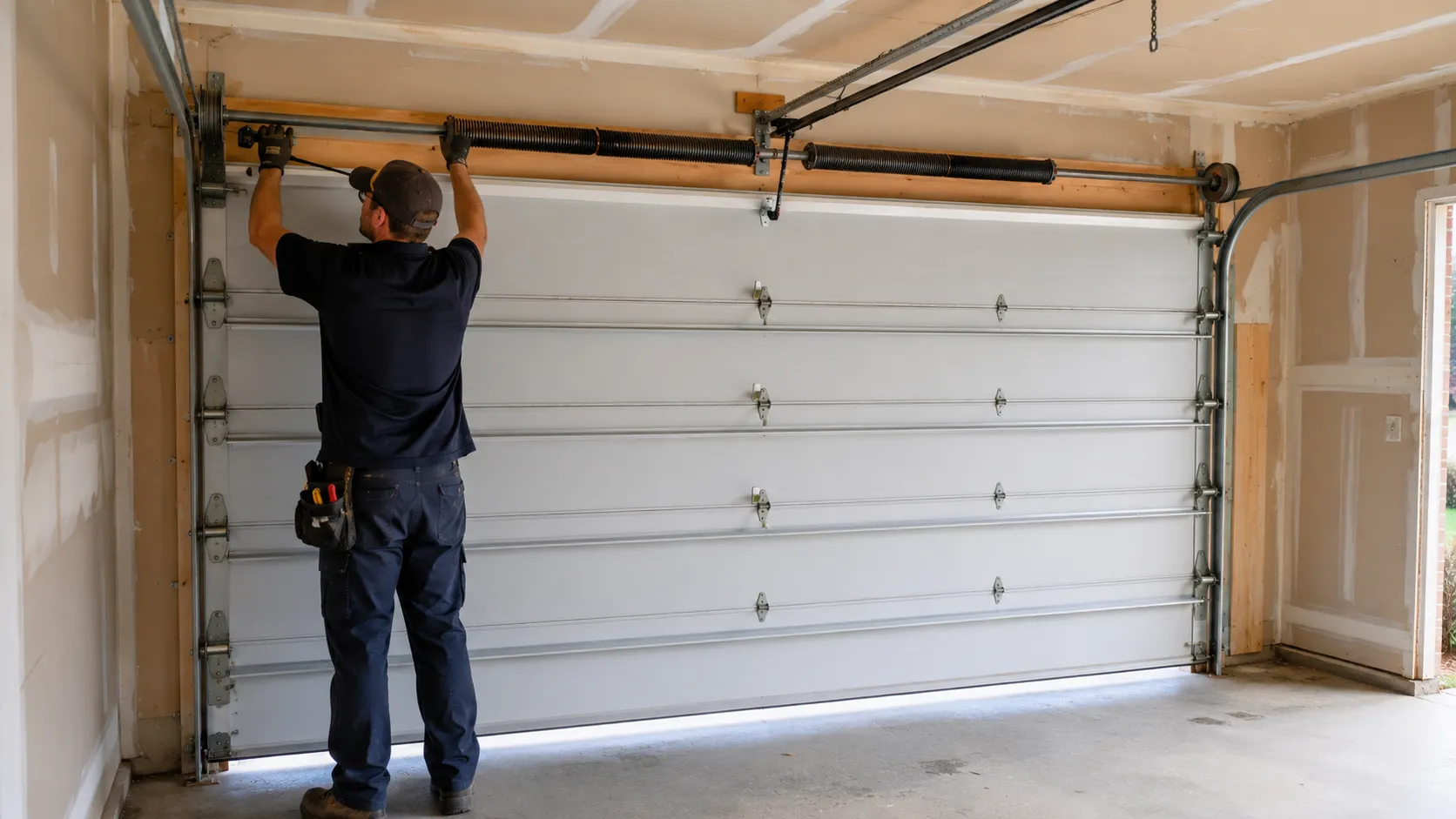
Widen that same panel to 16 feet and the middle third starts to flex before the edges do. That flex is what pulls rollers out of the track, bends end stiles, and eventually racks the whole door out of square.
Most of the garages in this service area were built between 1938 and 2009, with the bulk of that stock going up in the 1980s and 90s. Doors from that build-out were engineered to the wind-load standards of their decade, on single-rail track systems that assumed a door would hold its shape on its own.
They weren't built with the reinforcing struts that wider doors get today. So on an original 1980s double door, wind isn't fighting a reinforced panel - it's fighting sheet steel and gravity.
The failure doesn't usually look dramatic at first. A roller pops out of the track, a hinge bends a few degrees, a cable goes slack on one side. It's the next big gust that turns a bent hinge into a door off its track.
What the Weather Here Does to It
Palatine sits in a cold-severe climate band, and that matters for a wide door more than people expect. Steel contracts in cold weather, and a contracted panel sits slightly differently in its track than it did in August.
Add wind on top of that and you get play where there wasn't any - enough for a gust to catch the bottom edge and lift it a half-inch before the track corrects it. Do that a few dozen times over a winter and the track brackets work loose.
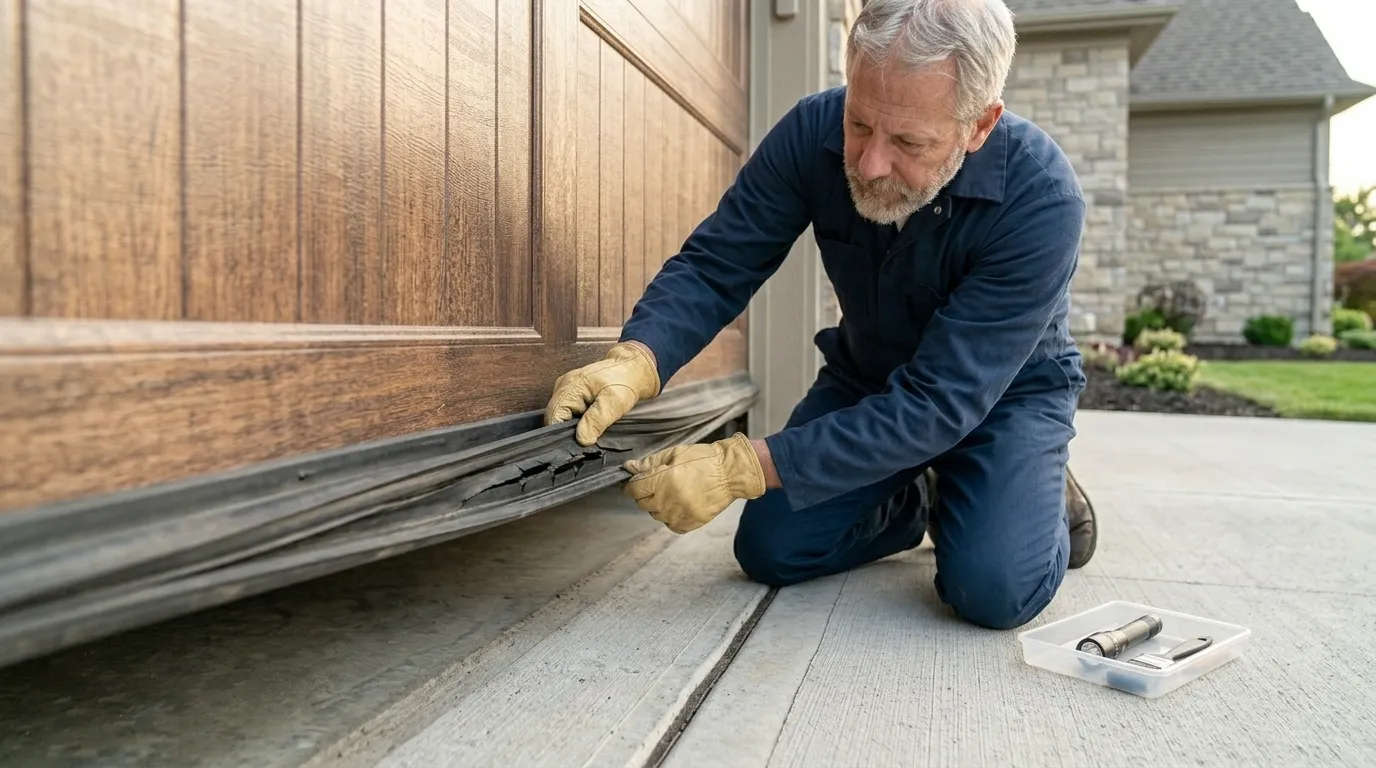
Cold also stiffens the weatherstripping at the bottom of the door. Rubber that seals tight in summer turns hard and shrinks a little in January, which leaves a gap along the floor. That gap is exactly where wind gets a grip on the underside of a wide panel and starts working it like a sail catching air from below rather than pushing flat against it.
We don't get hurricane-force events here, so this isn't about a door blowing in. It's slower than that: repeated cold-and-wind cycling loosens hardware that a warm, calm climate would leave alone for years. A door that would go a decade without track trouble somewhere milder starts showing roller wear here in half that time.
The Cost of This Job
There's no single price for fixing wind damage on a wide door, because the fix depends on what actually gave first - a bent roller bracket is a different job than a racked frame. What we can say is that most of the households in this area, with a median income around $110,844 and roughly 221,947 owner-occupied houses across the service area, are dealing with the same era of garage: original 1980s track on a door that was never fitted with a reinforcing strut kit.
Adding struts and swapping worn rollers for sealed nylon ones on a double door costs less than replacing bent track and rehanging the panel, and a lot less than replacing the door outright. The honest split is this: if the track is still straight and the damage is limited to a hinge or a roller, reinforcing what's there is the cheaper path. If the top or bottom panel has already bowed, or the frame the track bolts to has pulled away from the studs, patching it is throwing money at a door that's going to keep failing in the same spot every time the wind picks up.
Leaving It Alone
A garage door with a little play in the track isn't an emergency, and we won't tell you it is. Plenty of doors run for years with a slightly loose roller before anything gives. What we will say is that on a wide door built to 1980s-era standards, that play doesn't fix itself - it only gets worked looser by the next windy, cold stretch.
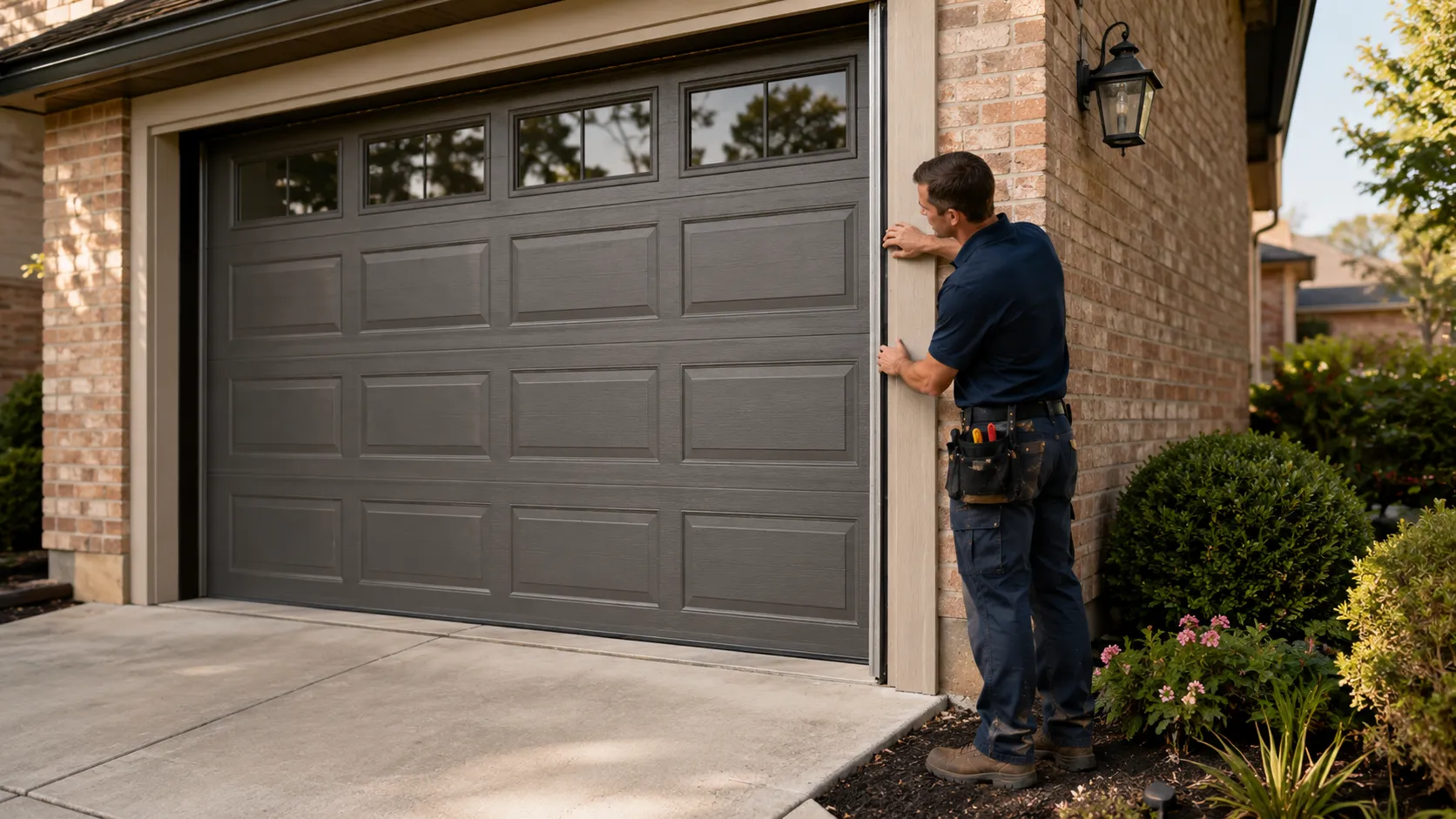
Here's the honest limit: we can't tell you over the phone whether a soft spot in your track is a ten-minute bracket adjustment or a sign the frame behind it has already shifted. Some of that only shows up once the door's open and someone's got a hand on the track. If you've got a double door built during the original run of construction here and it's been catching wind at the bottom edge all winter, it's worth a look before spring storms test it again - not because it's about to fail today, but because the parts that are already loose don't tighten themselves back up.
How We Can Help
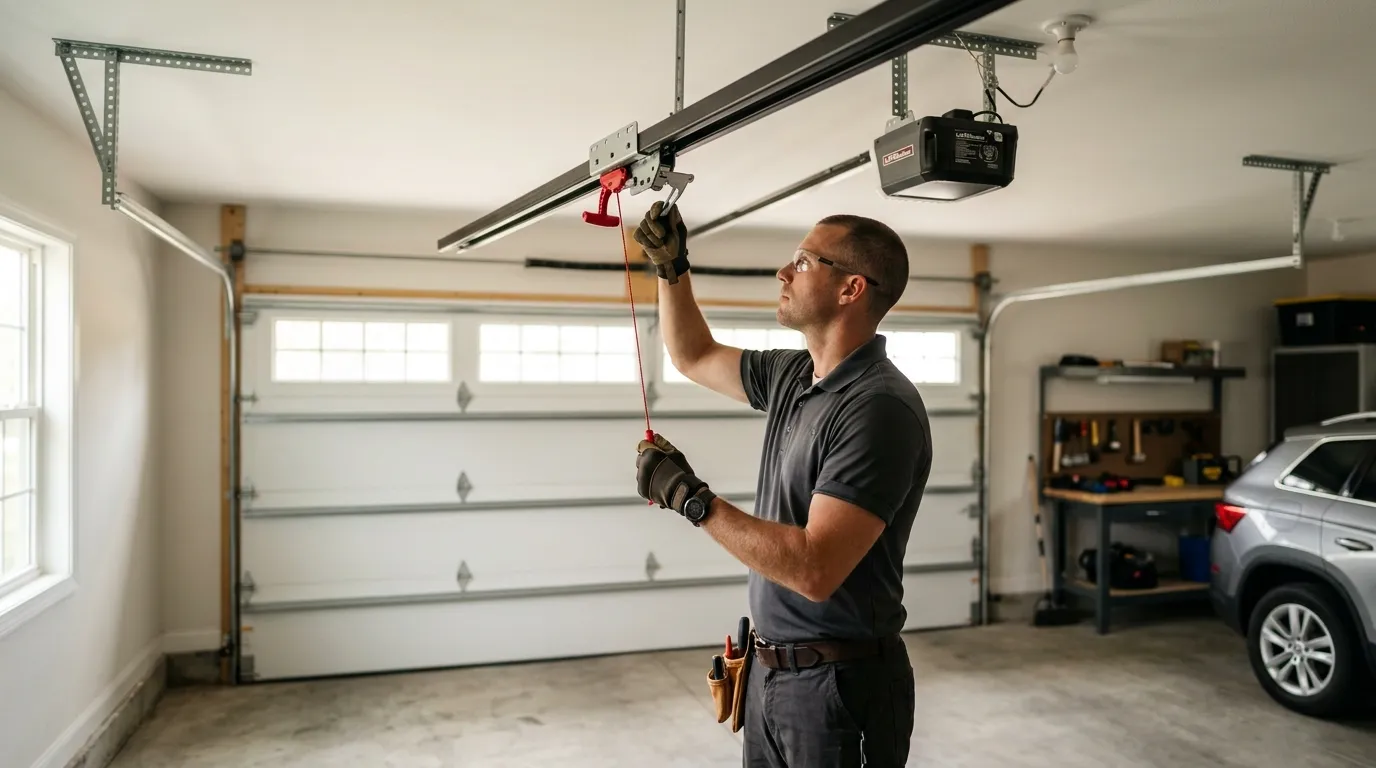
Garage Door Repair
Springs, cables, tracks, rollers, and openers fixed by a tech who explains the problem before touching anything.
Learn more →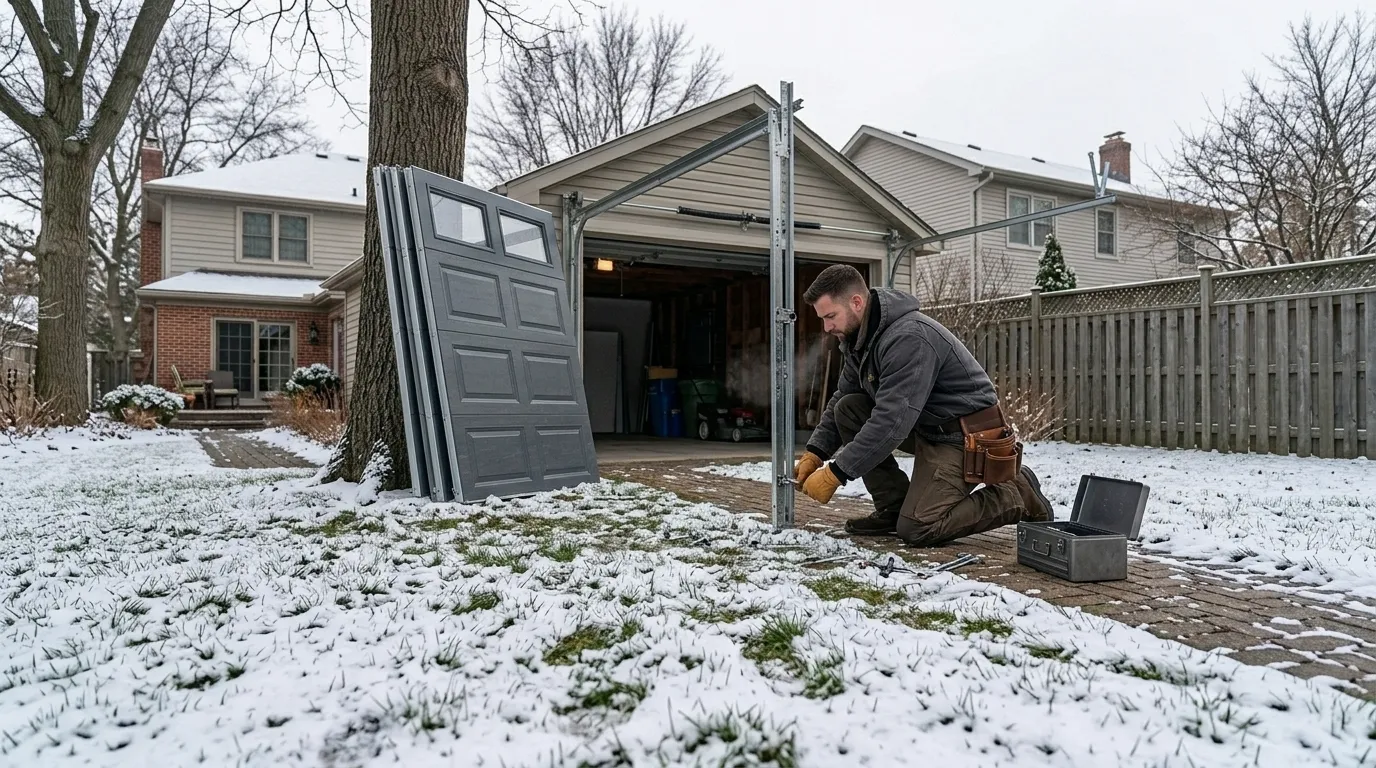
Garage Door Installation
New sectional doors sized and installed for the housing stock actually built in this area.
Learn more →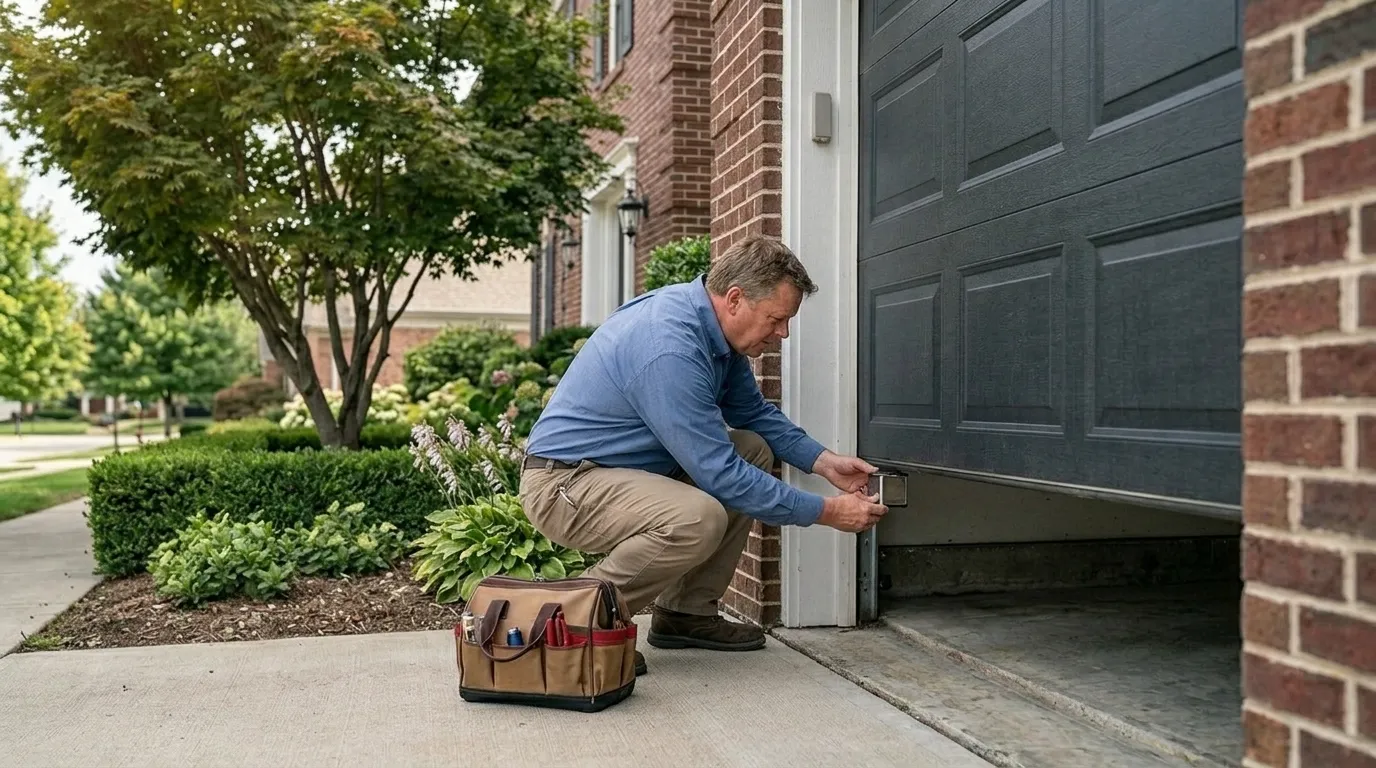
Garage Door Service
Tune-ups, lubrication, and safety checks that catch a small problem before it becomes a service call.
Learn more →Frequently Asked Questions
Why does my double garage door shake when it's windy?
On a wide double door, wind pressure spreads across more panel than the steel or the track was built to resist stiffly on its own, especially on doors from the original 1980s-90s build-out common in this area. The shake is usually rollers riding loose in the track rather than the door about to come off - but it's worth checking before it gets worse.
Does cold weather make wind damage to a garage door worse?
Yes. Cold contracts the steel slightly and stiffens the bottom weatherstripping, which opens a small gap wind can get under. That combination of cold-severe winters and wind cycling is harder on original track hardware here than in a milder climate, even without a single big storm.
Is it cheaper to reinforce an old door or replace it?
Depends on what's failed. If the track is still straight and it's a bent hinge or worn roller, reinforcing with struts and new rollers costs less than replacing the door. If the panel has already bowed or the frame the track bolts to has shifted, patching it usually just delays a replacement you'll end up paying for anyway.
Have a Door That Needs a Second Opinion?
Call and describe what it is doing - we will tell you what it likely is.